
International Day for the Fight against Illegal Unreported and Unregulated Fishing - June 5, 2026
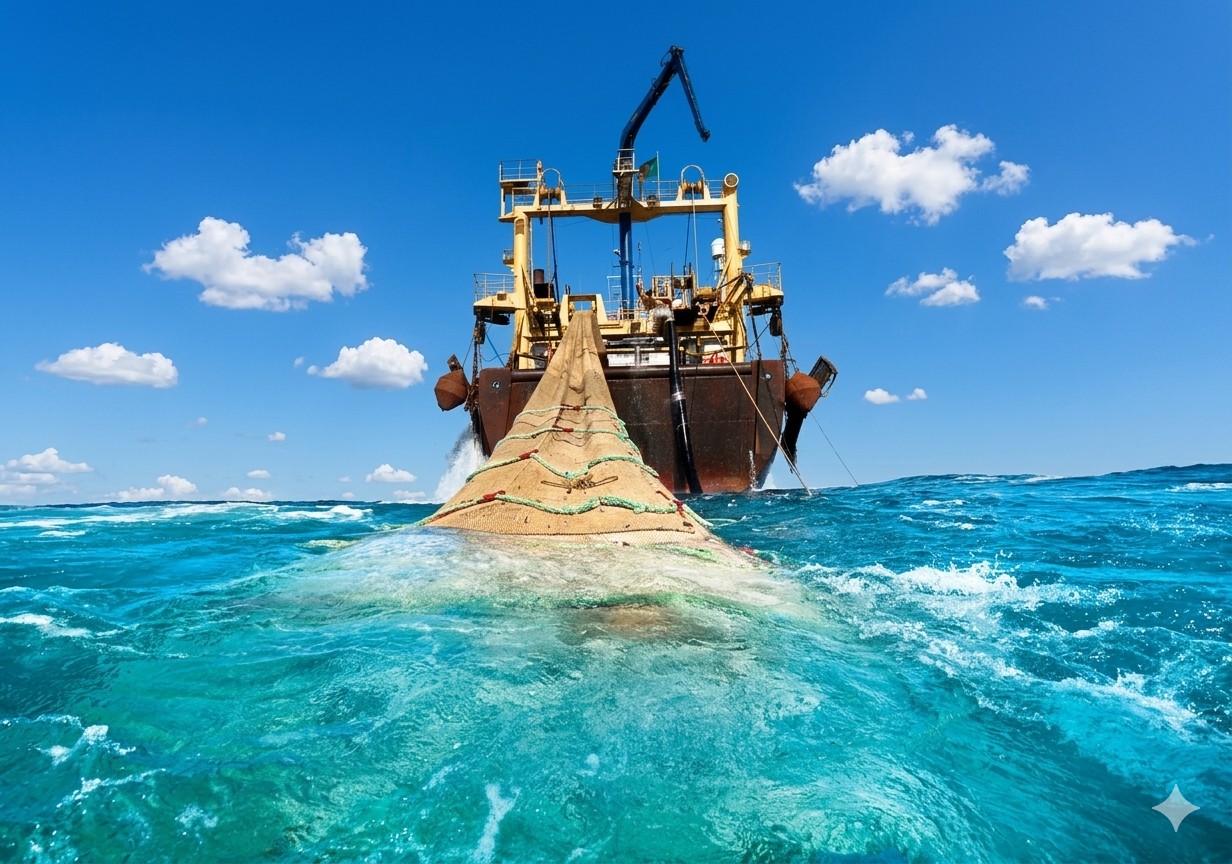
International Day for the Fight against Illegal Unreported and Unregulated Fishing is observed on June 5 to confront one of the most damaging and least visible crises in the world's oceans. Somewhere between eleven and twenty-six million tonnes of fish vanish from global waters every year through catches never declared, monitored, or counted against any quota. The communities most devastated by this are not distant corporations but small coastal villages where collapsing fish populations translate directly into collapsing households. Decades of international effort have produced binding agreements, yet enforcement across open oceans remains an ongoing struggle that this observance exists to spotlight.
International Day for the Fight against Illegal Unreported and Unregulated Fishing History
Illegal, unreported, and unregulated fishing emerged as a formally recognized crisis in the mid-1990s, when global monitoring agencies began quantifying how much of the annual catch was occurring entirely outside any regulatory framework. The economic damage was staggering: conservative estimates placed annual losses between ten and twenty-three billion dollars, while ecological harm to spawning populations and reef ecosystems compounded far beyond any monetary measure. Regional fisheries management organizations existed but lacked jurisdiction over vessels flying flags of convenience, leaving vast stretches of international water effectively ungoverned.
The F.A.O. took the first significant multilateral step in 1995 by adopting a voluntary Code of Conduct for Responsible Fisheries, urging member states to manage stocks sustainably and share catch data transparently. Progress was slow, and by 2009 a harder instrument was needed: the F.A.O. Agreement on Port State Measures, which required signatory ports to deny entry to vessels suspected of I.U.U. activity. That agreement entered into force in 2016, and the U.N. General Assembly seized the momentum to proclaim International Day for the Fight against Illegal Unreported and Unregulated Fishing in 2017, giving the global fight against illegal catches a fixed annual focal point.
Subsequent years brought additional pressure through the 2015 Sustainable Development Agenda, which embedded ocean health into the broader framework of global development goals and gave governments a political basis for tighter domestic enforcement. The U.N. designated 2022 as the International Year of Artisanal Fisheries and Aquaculture, sharpening focus on small-scale fishers in the Global South who suffer most when industrial operators deplete shared stocks. The architecture of international response has grown considerably since the 1990s, though the gap between framework and enforcement continues to define the central challenge.
Why International Day for the Fight against Illegal Unreported and Unregulated Fishing Matters
Binding Rules Require Political Will
Every international agreement restricting I.U.U. fishing required years of negotiation, and the gap between signing and enforcement is where most progress is lost. Sustained public awareness keeps pressure on governments to prioritize ratification, funding, and at-sea monitoring rather than treating ocean governance as a low-urgency diplomatic afterthought.
Coastal Livelihoods Hang in the Balance
Artisanal fishing communities across Southeast Asia, West Africa, and Latin America depend on healthy local stocks for food security and income, and I.U.U. fleets operating in their waters extract resources those communities have no power to reclaim. Supporting this occasion means supporting the people with the most to lose.
Oceans Cannot Self-Repair Indefinitely
Fish populations operate on reproductive cycles that collapse faster than they recover once overfishing crosses certain thresholds, making each unrecorded catch a permanent subtraction from a finite biological system. The downstream consequences reach coral reef health, plankton dynamics, and atmospheric carbon absorption in ways that extend far beyond the fishing industry itself.
How to Observe International Day for the Fight against Illegal Unreported and Unregulated Fishing
Respect Regulated Waters
For anyone who fishes recreationally, checking local regulations on seasonal closures, gear restrictions, and catch limits before heading out is both a legal obligation and a meaningful contribution to the principles this event champions. Compliance at the individual level reinforces the cultural norm that fishing rules exist for a reason worth honoring.
Engage With the Research
Several organizations publish accessible annual reports on I.U.U. trends, including the F.A.O. and Global Fishing Watch, which uses satellite tracking to map vessel behavior in near real time. Spending an hour with one of these resources replaces vague concern with specific knowledge that informs better decisions and sharper conversations.
Trace Your Seafood's Origin
Many retailers and restaurants now provide sourcing information for fish and shellfish, and choosing certified sustainable products directly reduces demand for supply chains that tolerate undeclared catches. Asking where your fish came from is a small act that, multiplied across millions of consumers, shifts purchasing power toward accountable operators.
Facts About IUU Fishing
Flags of Convenience Enable Evasion
Many I.U.U. vessels register under the flags of nations with minimal maritime enforcement, allowing them to operate in regulated zones with little practical accountability.
Satellite Monitoring Changed Enforcement
Global Fishing Watch launched in 2016 and now tracks over 65,000 vessels using AIS data, making previously invisible fishing activity visible to regulators and journalists for the first time.
Forced Labor Frequently Accompanies Illegal Fleets
Investigations into I.U.U. operations have repeatedly uncovered trafficking and forced labor aboard vessels, linking illegal fishing to broader human rights violations at sea.
Some Species Near Collapse
Bluefin tuna, toothfish, and several shark species have experienced severe population declines directly linked to unreported catch volumes exceeding regulated limits by wide margins.
Port Controls Prove Most Effective
Denying port access to vessels with suspicious catch records has proven more effective than at-sea interdiction, since chasing vessels across open ocean is logistically difficult for most coast guards.
International Day for the Fight against Illegal Unreported and Unregulated Fishing Dates
| Year | Date |
| 2026 | June 5 |
| 2027 | June 5 |
| 2028 | June 5 |