
National Sewing Machine Day - June 13, 2026
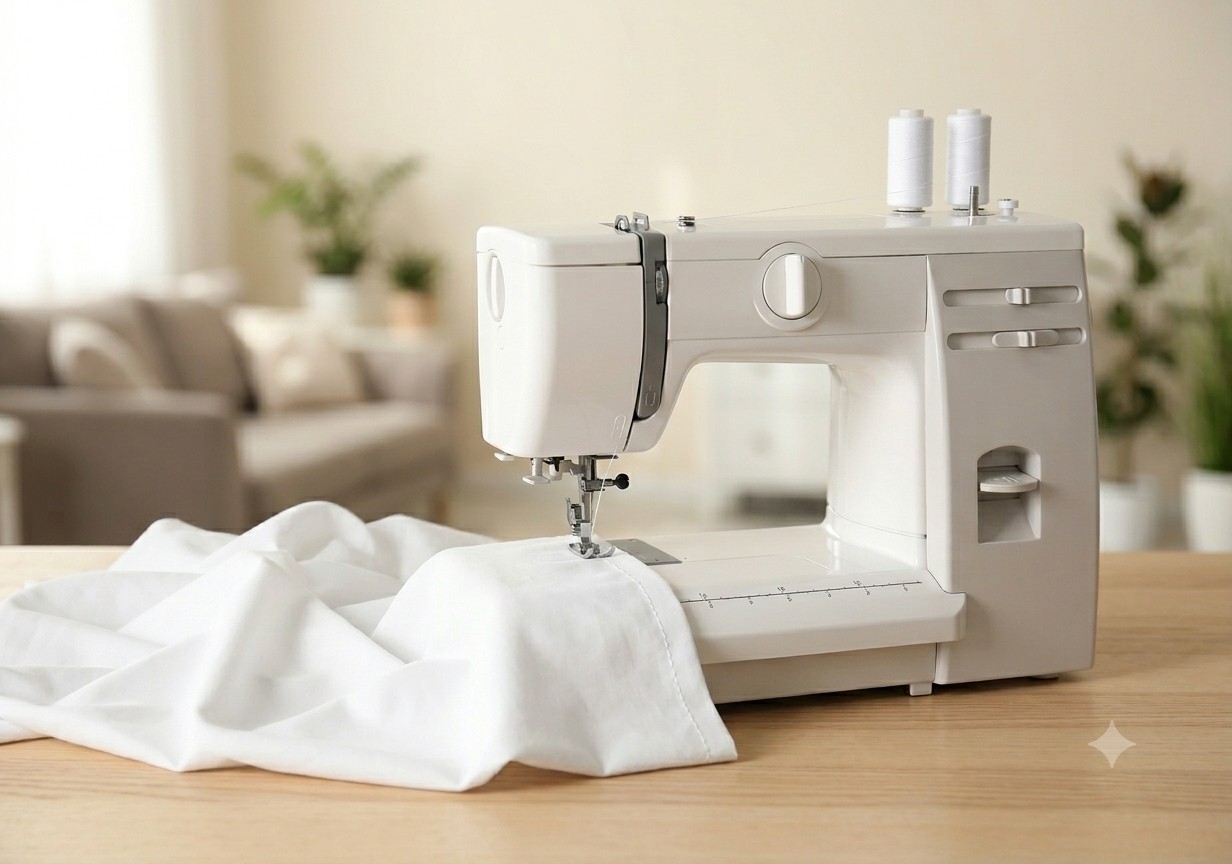
National Sewing Machine Day is celebrated on June 13, marking the invention that quietly decided what people could wear, who could afford to look a certain way, and whether a family spent its evenings sewing or doing something else entirely. For most of human history, clothing was rationed by the time it took to make, which meant that having more than a few garments was a privilege of wealth or leisure. One machine changed that arithmetic so completely that within a generation, a factory worker could own a wardrobe that a medieval nobleman could not. Few inventions have redistributed something as basic as appearance.
National Sewing Machine Day History
The sewing machine arrived not as a single invention but as a century-long argument between inventors who kept improving on each other's failures. Charles Frederick Wiesenthal patented a double-pointed mechanical needle in 1755, and Thomas Saint produced a more complete chain-stitch design in 1790, though no verified working model from Saint's plans has ever been found. National Sewing Machine Day was established to mark the entire arc of that development, from the first incomplete patents through to the machine that finally entered homes and changed them permanently. The decisive working prototype came from French tailor Barthélemy Thimonnier, who built and operated a functioning machine in 1829 and ran a small uniform factory on its output.
The violence of the reaction to Thimonnier's factory tells the real story of what was at stake: in 1831, a mob of Parisian hand-sewers stormed his workshop and destroyed the machines, understanding clearly that a device this efficient meant the end of their livelihood. American inventor Elias Howe patented a lockstitch mechanism in 1846 that solved the core engineering problem, and Isaac Singer refined and commercialized it through the 1850s with a relentless focus on making the machine accessible rather than merely functional. Singer's installment payment plans brought machines into working-class homes for the first time, and his dealer network trained buyers to use them, which mattered as much as the affordability.
By the 1880s, the sewing machine was among the most widely owned manufactured objects in American households, and its effects ran well beyond fabric. The ready-to-wear garment industry grew directly from the machine's industrial-scale adoption, eventually producing clothing so cheaply that home sewing shifted from economic necessity to personal choice. That inversion, from obligation to option, is the quiet revolution the machine completed: it did not just change how clothes were made but changed the terms on which people related to making things at all.
Why National Sewing Machine Day Matters
Making Against the Current
Home sewing has become one of the more direct responses available to the environmental and ethical problems of fast fashion, producing garments from chosen materials that fit the wearer precisely and last considerably longer than mass-market alternatives. The decision to make rather than buy is a small structural argument about value and durability, repeated in fabric.
Craft Keeps Knowledge Alive
Every generation that sews passes down a form of material intelligence that mass production cannot replicate or replace, including how fabric behaves, how seams bear stress, and how a garment is built to last rather than to sell. That knowledge lives in hands and in practice rather than in manuals, which means it requires active transmission to survive.
Speed Was Just the Beginning
The sewing machine reduced garment construction time by roughly ninety percent compared to hand-sewing, but the more durable consequence was what happened to the hours it recovered. Women who had spent full days stitching family clothing now had time that could go toward paid work, education, or simply rest, and that redistribution of hours had social effects that outlasted any particular design improvement.
How to Celebrate National Sewing Machine Day
Watch the Professionals Work
The Great British Sewing Bee offers several series of competition structured around alterations, pattern challenges, and made-to-measure construction, providing a genuine education in technique alongside its drama. Project Runway covers the design and deadline pressures of professional garment work across more than a decade of episodes. Either show is worth watching with a machine nearby and something to work on.
Find a Pattern That Intimidates You
Choosing a project slightly beyond your current ability is the fastest path to genuine improvement, and pattern instruction sheets are considerably more approachable than they appear at first reading. Fabric stores frequently run beginner workshops around this occasion, offering hands-on guidance in a low-pressure setting. The worst outcome is an imperfect first attempt, which is also how most skilled sewers describe their beginnings.
Tackle a Repair Backlog
Most households quietly accumulate clothes waiting to be mended: split seams, missing buttons, hems that never got fixed and eventually got forgotten. Spending a few hours on repairs rather than replacements is practical, satisfying, and requires far less skill than building something from scratch. It is also the most honest way to discover whether sewing is worth pursuing further.
Facts About Sewing Machines
The Patent War Outcome
Elias Howe, Isaac Singer, and several other inventors spent the early 1850s in bitter patent litigation before forming the Sewing Machine Combination in 1856, a patent pool that became one of the earliest examples of that legal arrangement in American industrial history.
Feeding the War Effort
The Union Army contracted with Singer and other manufacturers during the American Civil War to produce uniforms at scale, and the sewing machine's output capacity is credited with giving Union forces a logistical advantage in clothing and equipping troops faster than hand production could have allowed.
The First Mass-Market Appliance
Technology historians frequently cite the household sewing machine as the first truly mass-produced consumer appliance, predating widespread domestic adoption of other machines by several decades and establishing retail and manufacturing models that later industries copied directly.
Still Running After a Century
Singer built machines of such mechanical durability that examples from the late 19th and early 20th centuries remain in working condition today, sustaining a collectors' market and a community of practical users who prefer their construction to modern equivalents.
Computerized Since the 1970s
The first computerized sewing machines appeared in 1978, enabling users to store and select stitch patterns electronically, a development that eventually produced embroidery machines capable of executing complex multicolor designs from digital files with no manual adjustment between stitches.
National Sewing Machine Day Dates
| Year | Date |
| 2026 | June 13 |
| 2027 | June 13 |
| 2028 | June 13 |