
National Chamoy Day - June 13, 2026
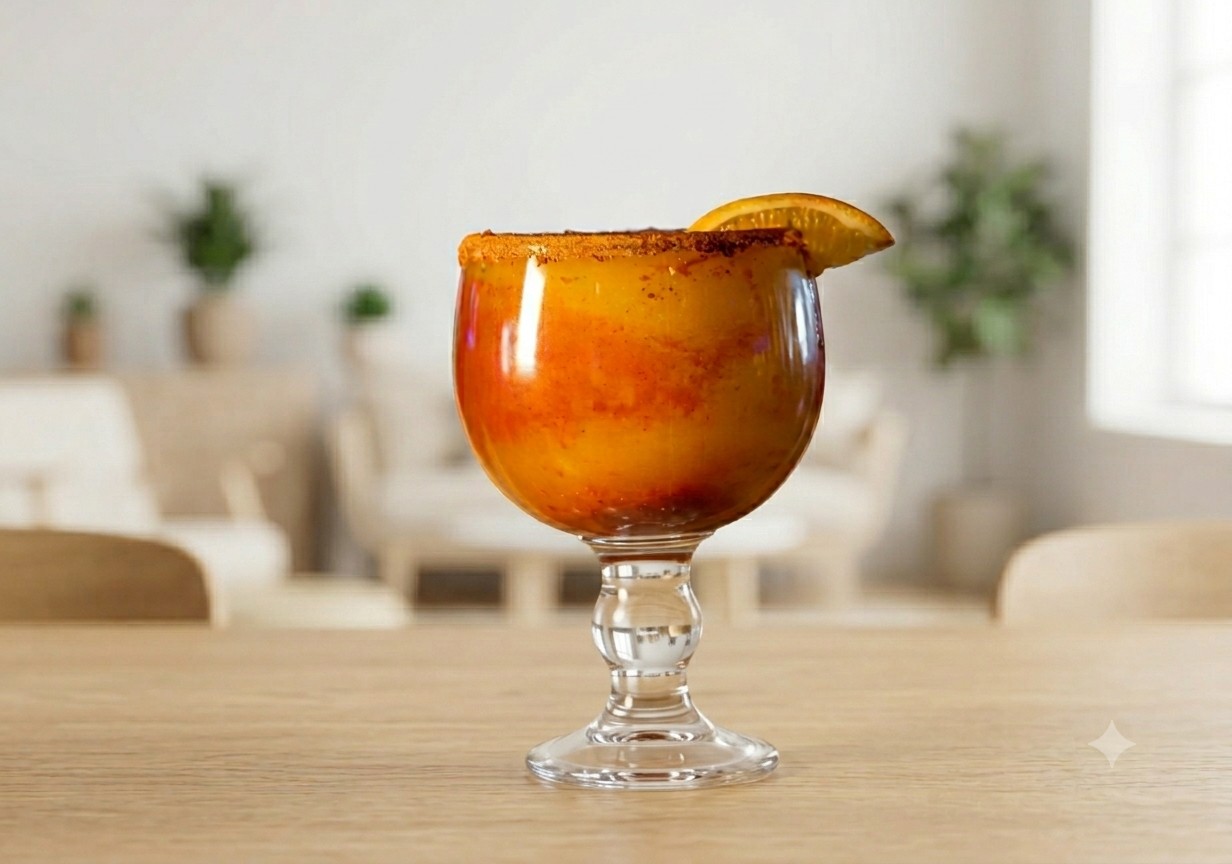
National Chamoy Day takes place on June 13 around a condiment that pulls off something most flavors cannot: it is simultaneously sweet, sour, salty, and spicy, hitting all four registers at once without any of them canceling the others out. That combination sounds chaotic on paper but lands as deeply satisfying in practice, which is why chamoy works equally well on fresh mango, cocktail rims, and candy coatings. It comes in liquid, powder, and paste form, each suited to a different application but all carrying the same distinctive flavor profile.
National Chamoy Day History
Chamoy is a condiment with a split identity: claimed as a cornerstone of Mexican street food culture, it was built almost entirely from Asian ingredients. The two most direct ancestors are umeboshi, the Japanese salt-cured ume fruit with its concentrated sour-salty intensity, and see mui, a Cantonese dried and salted apricot snack whose name means roughly "plum seed" and whose flavor profile is strikingly close to what chamoy eventually became. National Chamoy Day traces that lineage back to the Asian migration routes that brought both preparations to Mexico beginning in the 1590s, when Pacific trade opened sustained contact between Asian and Mexican food cultures for the first time. Over the following centuries those imported ingredients met local dried chiles, tamarind, and citrus, producing through gradual adaptation a condiment that belonged to neither tradition but drew from both.
Historians place chamoy's emergence as a distinct Mexican preparation somewhere between the 16th and 19th centuries, a span wide enough to reflect how slowly culinary hybrids accumulate rather than arrive. Tamarind and mango entered Mexican cooking through the same migration channels and eventually became standard chamoy ingredients, which is why the sauce varies so widely in its fruit base from one recipe to the next. For most of this period the condiment occupied a particular social niche: it was street food and market fare, found near carts and vendors rather than in restaurant kitchens, served as a sauce over cut fruit and sold in small quantities to people eating standing up.
The transition from street staple to mass-market product happened in the second half of the 20th century as commercial brands began bottling and distributing chamoy across Mexico and eventually into the United States, where it found a second life as a hot sauce category with its own shelf space in mainstream grocery stores. That American expansion repositioned the condiment considerably: it moved onto cocktail rims, into candy coatings, and through the chamoyada format combined shaved ice, fresh fruit, and sauce into a dessert-drink hybrid that became a fixture at taquerias and food trucks. The condiment that began as an improvised fusion of Asian preserved fruit and Mexican chile is now a recognized flavor category in two countries, with dedicated product lines and a cultural footprint far larger than its street-food origins suggested was possible.
Why National Chamoy Day Matters
Simple Enough for Any Kitchen
Chamoy requires no specialized equipment and no hard-to-source ingredients: dried fruit, dried chiles, tamarind, lime juice, and sugar are the core components, and the ratios can be adjusted to personal preference without breaking the recipe. Preparing it from scratch takes under an hour and produces a sauce with more complexity and depth than most commercial versions.
A Story About Migration and Taste
The fact that chamoy is a Mexican condiment with Asian DNA is not a curiosity but a lesson in how food actually moves through history: through people, through trade, through the slow accumulation of small adjustments made by cooks adapting ingredients to local materials and preferences. That story is encoded in the flavor itself, which tastes like neither Japan nor Cantonese China nor Mexico but like all three in negotiation with each other.
A Flavor That Belongs Nowhere and Everywhere
Chamoy does not fit neatly into any existing flavor category, which is precisely what makes it so useful across such a wide range of foods. The combination of fruit sweetness, chile heat, citrus acid, and salt creates a profile that enhances rather than competes with whatever it touches, from watermelon to grilled meat to a glass rim dusted for a spicy margarita.
How to Celebrate National Chamoy Day
Take It Into New Territory
Using chamoy somewhere it does not conventionally appear, stirred into a vinaigrette, brushed onto grilled shrimp, or folded into a spiced chocolate sauce, tests the logic of the condiment against new contexts and usually produces something worth repeating. The flavor profile is robust enough to survive translation into unfamiliar applications.
Cook From Scratch
Following a traditional chamoy recipe, starting with dried apricots or plums, ancho or guajillo chiles, tamarind paste, and fresh lime, produces a sauce that differs meaningfully from anything in a bottle and shows exactly where the flavor is coming from at each step. The process is instructive in the same way that making a stock from bones is instructive: it explains the finished product in a way that buying it never does.
Build a Chamoy Tasting Board
Assembling a spread of fresh fruit, vegetables, and a few commercial chamoy products lets you explore how the condiment behaves across different textures and flavor profiles without committing to a full recipe. Sliced mango, jicama sticks, watermelon wedges, and cucumber alongside two or three sauce variations reveals the range quickly and makes the occasion social. Add a chamoyada in a glass, with shaved ice, fruit, and sauce layered together, and the tasting becomes a proper exploration.
Facts About Chamoy
The Candy Connection
Chamoy is the primary flavoring behind a category of Mexican candy that includes powder-coated gummies, tamarind pulp rolls, and chile-dusted lollipops, making it one of the few condiments that doubles as a confectionery ingredient with its own dedicated product aisle.
A Legal Dispute Over the Name
In the early 2000s, Mexican food authorities debated whether chamoy products sold commercially met a consistent enough standard to carry the name, leading to informal industry guidelines about minimum chile and fruit content that commercial producers began following voluntarily.
The Chamoyada Format
The chamoyada, a drink-dessert hybrid combining sorbet or shaved ice with fresh fruit, tamarind candy, and chamoy sauce, originated in Mexican street food culture and has become a signature summer item at taquerias and Latin food trucks across the United States.
Powdered Chamoy Has a Different Use Case
Chamoy powder, sold separately from the sauce, is primarily used to coat candy and fresh fruit rather than as a drizzle, and its flavor is more intensely concentrated than the liquid version because the moisture has been removed, making a small amount go considerably further.
It Predates the Bottle
Chamoy was prepared and sold fresh by market vendors for most of its history before commercial bottling made it a shelf-stable product, and fresh chamoy preparations still exist at traditional Mexican markets where the sauce is made daily and sold by the scoop rather than the bottle.
National Chamoy Day Dates
| Year | Date |
| 2026 | June 13 |
| 2027 | June 13 |
| 2028 | June 13 |