
International Axe Throwing Day - June 13, 2026
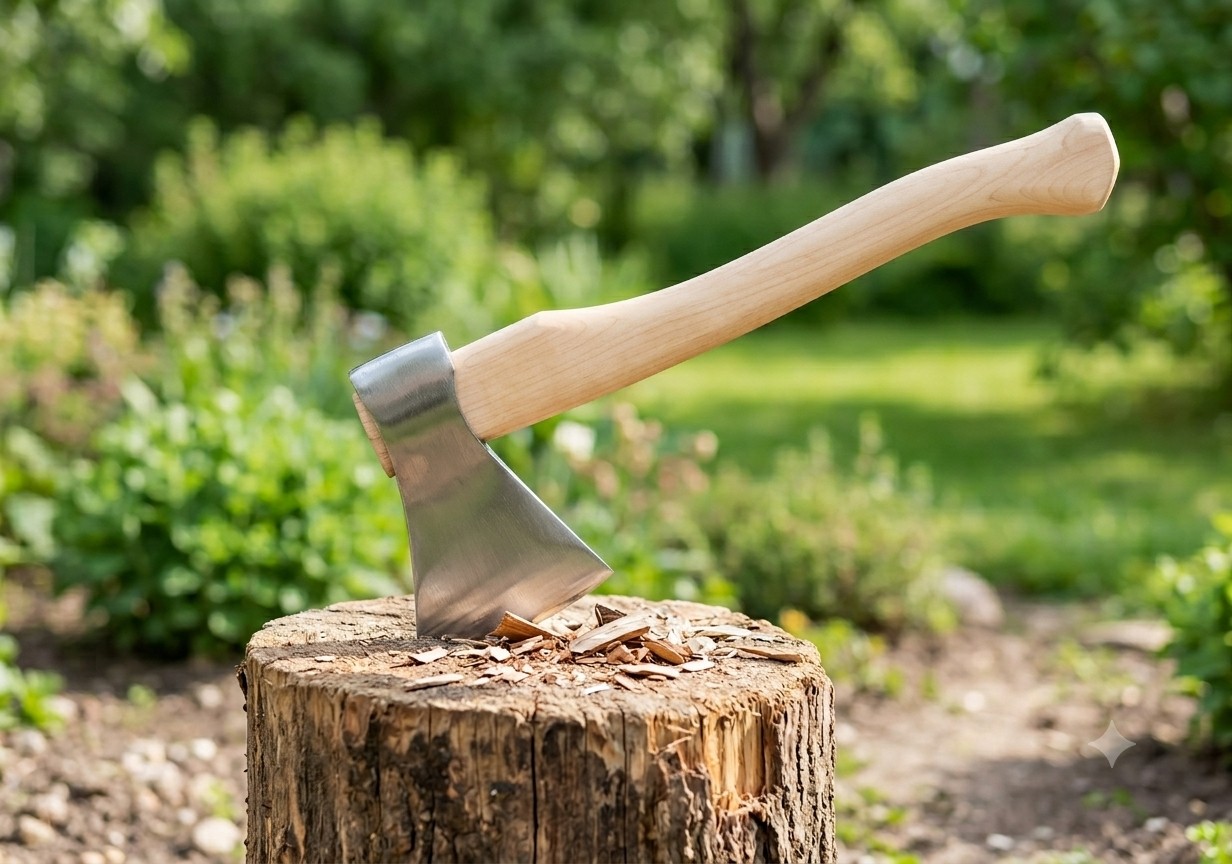
International Axe Throwing Day is celebrated on June 13 each year, built around a sport whose entire premise fits in one sentence: throw a bladed tool at a wooden target and hit what you aimed at. What began as a logging camp pastime in 19th-century North America now fills purpose-built urban venues on three continents, with leagues, tournaments, and walk-in sessions running year-round. Clubs open their lanes for free on this occasion, removing the last excuse not to try it. Most beginners land a clean throw within their first half hour, which is the kind of immediate feedback that turns a one-time outing into a regular habit.
International Axe Throwing Day History
Axes were tools before they were anything else, designed for splitting wood and shaping timber, and the physical logic of throwing one accurately at a fixed point grew naturally out of the work camps where loggers spent long seasons far from entertainment. Lumberjack culture in 19th-century North America, particularly across Canada and the northern United States, developed informal throwing contests as a form of camp recreation, testing the same arm strength and eye the job demanded but in a format that was competitive rather than productive. International Axe Throwing Day draws directly on that lineage, celebrating a pastime that began in sawdust and eventually migrated into urban venues with mood lighting and craft beer on tap. The decisive working prototype came from French tailor Barthélemy Thimonnier, who built and operated a functioning machine in 1829 and ran a small uniform factory on its output.
The competitive structure that formalized the sport borrowed its logic from archery and darts: a circular target mounted on a wood round, scored by concentric rings with the bullseye at the center worth the most points. Standard targets in organized competition measure 36 inches across and include a small outer ring called the Clutch, positioned at the top, which carries higher point value but demands a specific throw to reach. The World Axe Throwing League, founded in 2016, established unified rules and launched international competition, with national leagues in Canada, the United States, the United Kingdom, and Australia affiliating under its umbrella and bringing the sport a governance structure it had never had before.
The urban venue model that accelerated the sport's growth arrived around 2015, when entrepreneurs in Toronto and Chicago began opening indoor facilities specifically built for recreational axe throwing, stripped of the outdoor context and packaged as an experience for groups. The format spread rapidly because it required no prior skill, fit naturally into a two-hour social outing, and offered something genuinely different from a bowling alley or an escape room. By the early 2020s, thousands of venues operated globally, and the sport had moved from novelty to established leisure category, with governing bodies, certified coaches, and a competitive circuit that draws participants who never set foot near a forest.
Why International Axe Throwing Day Matters
A Sport Still Being Defined
Axe throwing is young enough as a formalized sport that its rules, equipment standards, and competitive formats are still actively being negotiated by the organizations overseeing it, which means participants today are part of shaping what it becomes rather than inheriting a fixed tradition. The overlap between recreational and competitive communities is still porous, with casual venue regulars moving into league play and professionals teaching technique at the same clubs where beginners take their first throws.
Precision Under Pressure
Landing a throw on a specific ring demands a particular kind of focused attention that quiets other mental noise, functioning less like exercise and more like a physical form of concentration that empties the head. Regular practitioners describe the state it produces in terms similar to what meditators and archers report: a narrowing of attention to a single task that makes everything else temporarily irrelevant.
A Skill Anyone Can Acquire
Axe throwing has a short learning curve that makes the first session satisfying rather than frustrating, with most beginners landing consistent throws within thirty minutes of instruction. The technique is teachable, the feedback is immediate, and improvement is visible within a single visit, a combination that few physical activities can offer to people with no prior experience.
How to Celebrate International Axe Throwing Day
Dig Into the History
The lumberjack competition circuit that gave rise to axe throwing as sport is well documented in North American regional history, with events like the Lumberjack World Championships in Hayward, Wisconsin running continuously since 1960 and preserving the original contest format. Reading about that tradition gives the modern urban version a deeper context than the venue aesthetic suggests.
Watch Competition Footage
The World Axe Throwing League streams competition events and posts highlight footage that shows what accurate, consistent throwing looks like at the competitive level, which is a useful calibration for anyone who tried it recreationally and wants a sense of how far the skill can develop. Watching experienced throwers reveals the subtleties of stance, grip, and release that are hard to diagnose in your own throw from the inside.
Walk Into a Venue Cold
Participating venues offer free sessions on this occasion specifically to give first-timers a chance to try the sport without any financial commitment, and the staff at most facilities are trained to get complete beginners throwing accurately within the first few minutes. Bringing a group makes the experience better because the competition is immediate and the feedback loop of watching others throw teaches as much as throwing yourself.
Facts About Axe Throwing
The Clutch Ring
In World Axe Throwing League competition, a small blue circle at the top of the target called the Clutch scores seven points compared to six for the bullseye, but only when the thrower calls it in advance, adding a high-stakes declaration element borrowed from billiards.
Hatchets Versus Full Axes
Most recreational and competitive axe throwing uses a hatchet rather than a full-sized felling axe, typically weighing between 1.5 and 2 pounds, because the lighter weight allows for more controlled rotation over the standard throwing distance of about 12 to 15 feet.
A Canadian Origin Story
The first commercial indoor axe throwing venue is widely credited to BATL, the Backyard Axe Throwing League, which opened in Toronto in 2006 and built the recreational model that thousands of venues worldwide subsequently copied.
Governed by Two Major Bodies
The sport currently operates under two competing international organizations, the World Axe Throwing League and the National Axe Throwing Federation, each with their own rule sets and affiliated venues, creating a governance split that mirrors the early years of other combat and precision sports.
Rain Does Not Stop Play
Unlike most outdoor precision sports, competitive axe throwing moved indoors early enough in its organized history that weather has never been a significant factor in the competitive calendar, giving it a scheduling consistency that outdoor lumberjack competitions still lack.
International Axe Throwing Day Dates
| Year | Date |
| 2026 | June 13 |
| 2027 | June 13 |
| 2028 | June 13 |