
Monkey Around Day - June 14, 2026
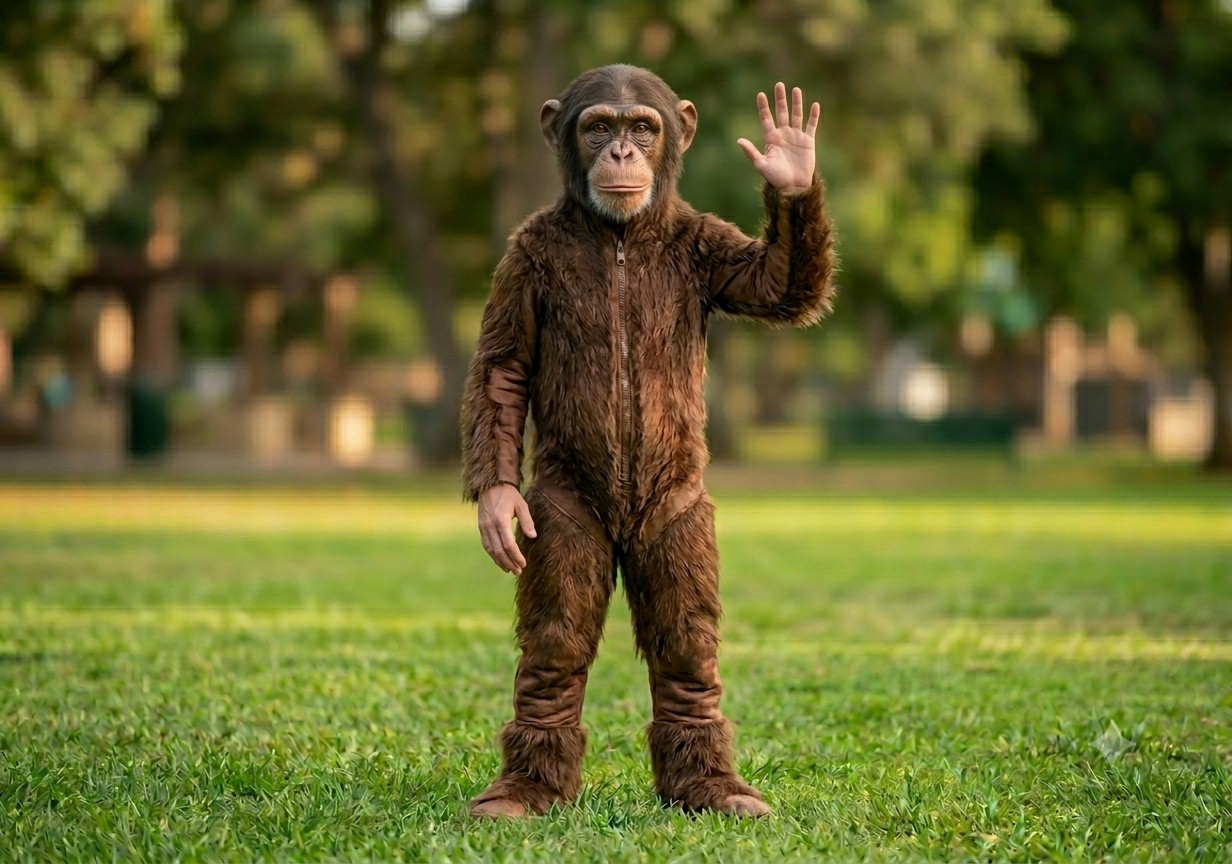
Monkey Around Day is marked on June 14, giving everyone an official excuse to drop their to-do lists and spend a few hours doing absolutely nothing useful. Productivity culture has a way of making idle time feel like a personal failure, which is precisely why a day built around goofing off carries more value than it might first appear. Permission to be silly, spontaneous, and genuinely unscheduled is rarer than it should be for most adults navigating busy lives. Grabbing that permission and actually using it is the entire point.
Monkey Around Day History
Monkeys have lent their name to a surprisingly rich corner of the English language, and the phrase "monkey around" sits at the heart of it with roots that stretch back well before anyone thought to name a holiday after it. Its closest linguistic ancestor is "monkeyshine," a word coined in 1832 to describe harmless pranks and mildly boisterous behavior, drawing on the playful and unpredictable nature that observers associated with primates. From there the family of expressions expanded: "monkey business" entered common use to describe anything frivolous or mildly mischievous, and "monkey around" eventually settled into everyday speech as a way to describe leisure without purpose or agenda. It was this spirit of cheerful aimlessness that Monkey Around Day was established to put on the calendar, founded by Bob Matthews of Rochester, New York in 2016.
Matthews ran Holiday Insights, a site dedicated to tracking and promoting unofficial observances, and the origin of this particular day was personal rather than commercial. He chose June 14 to coincide with the birthday of his daughter Kimberly, who had loved monkeys since early childhood with a devotion that went well beyond a passing phase. The motivation behind the day was equally personal: Matthews felt his family carried too much stress and needed at least one designated occasion to set it aside entirely, to stop planning and optimizing and simply fool around. That specific, human reason behind the founding gives the occasion a warmth that many invented holidays lack.
What makes a day like this worth taking seriously, ironically enough, is what research on rest and play consistently shows: unstructured time is not wasted time. The mental and physical benefits of genuine leisure, the kind with no goal attached and no performance required, are well documented, yet most people treat it as something to earn rather than something to schedule. Watching actual monkeys for any length of time makes this point without words. They climb, chase, groom, and rest in cycles that follow no external clock, and there is something in that image worth borrowing, at least for an afternoon.
Why Monkey Around Day Matters
Levity Strengthens Bonds
Shared silliness between people builds a different kind of closeness than shared accomplishment does. Laughing together over something pointless, playing a game with no stakes, or doing something mildly ridiculous as a group creates memories that stick longer than most organized events. Making space for that kind of interaction, even once a year, keeps relationships from becoming purely functional.
Unexpected Discoveries Happen
Some of the most interesting things people find out about themselves emerge not from deliberate self-improvement but from unstructured play. Trying something random, following a whim, or saying yes to something silly without any expectation of outcome occasionally leads somewhere genuinely surprising. The low-stakes nature of goofing off is precisely what makes it a safe environment for accidental discovery.
Reclaiming Unproductive Time
Adults are conditioned to justify their hours, which means genuine leisure rarely happens by accident and almost never happens without guilt. Setting aside a specific day to be deliberately unproductive short-circuits that conditioning and gives the brain space it does not usually get. The recovery that follows tends to make the productive hours sharper, not softer.
How to Celebrate Monkey Around Day
Capture and Share the Chaos
Documenting the day with photos or short videos and sharing them with people who were not there extends the energy of the occasion beyond the people who participated. Seeing someone else being genuinely unguarded and silly has a contagious effect that polished content rarely does. A candid moment of real fun, shared without much curation, is worth more than a carefully staged post.
Try Something Physically Ridiculous
Monkey Around Day is an ideal occasion to attempt something that feels undignified: a trampoline park, a bouldering gym, a silly obstacle course, or any physical activity that prioritizes movement over grace. The self-consciousness that normally prevents adults from doing things badly in public has nowhere to hide when the whole point is to be clumsy and have fun with it.
Spend Time with Real Monkeys
A visit to a zoo or primate sanctuary on this occasion carries an obvious thematic logic and turns out to be genuinely engaging for adults and children alike. Watching different species interact, problem-solve, and play reveals behavioral similarities to humans that are alternately funny and thought-provoking. Most people leave knowing far more about primate behavior than they expected to care about.
Facts About Monkeys
Exceptional Problem Solvers
Capuchin monkeys have been observed using stone tools to crack open nuts, a behavior that requires planning and learned technique passed down through generations within the same group.
Remarkable Color Vision
While most mammals see in limited color ranges, many Old World monkey species possess trichromatic vision similar to humans, an adaptation believed to help them identify ripe fruit among dense foliage.
Social Memory Is Long
Macaques have been shown in studies to remember the faces of other individuals for years, including the faces of humans they encountered only briefly, suggesting a social intelligence far beyond simple recognition.
Laughter Has Primate Roots
Great apes and some monkey species produce vocalizations during play that researchers identify as functionally equivalent to laughter, suggesting that humor and play signaling have deep evolutionary origins shared with humans.
Geographic Spread Is Wide
Monkeys are native to every inhabited continent except Australia and Antarctica, with species adapted to environments ranging from tropical rainforests and savanna grasslands to high-altitude mountain ranges with heavy seasonal snowfall.
Monkey Around Day Dates
| Year | Date |
| 2026 | June 14 |
| 2027 | June 14 |
| 2028 | June 14 |