
D-Day - June 6, 2026
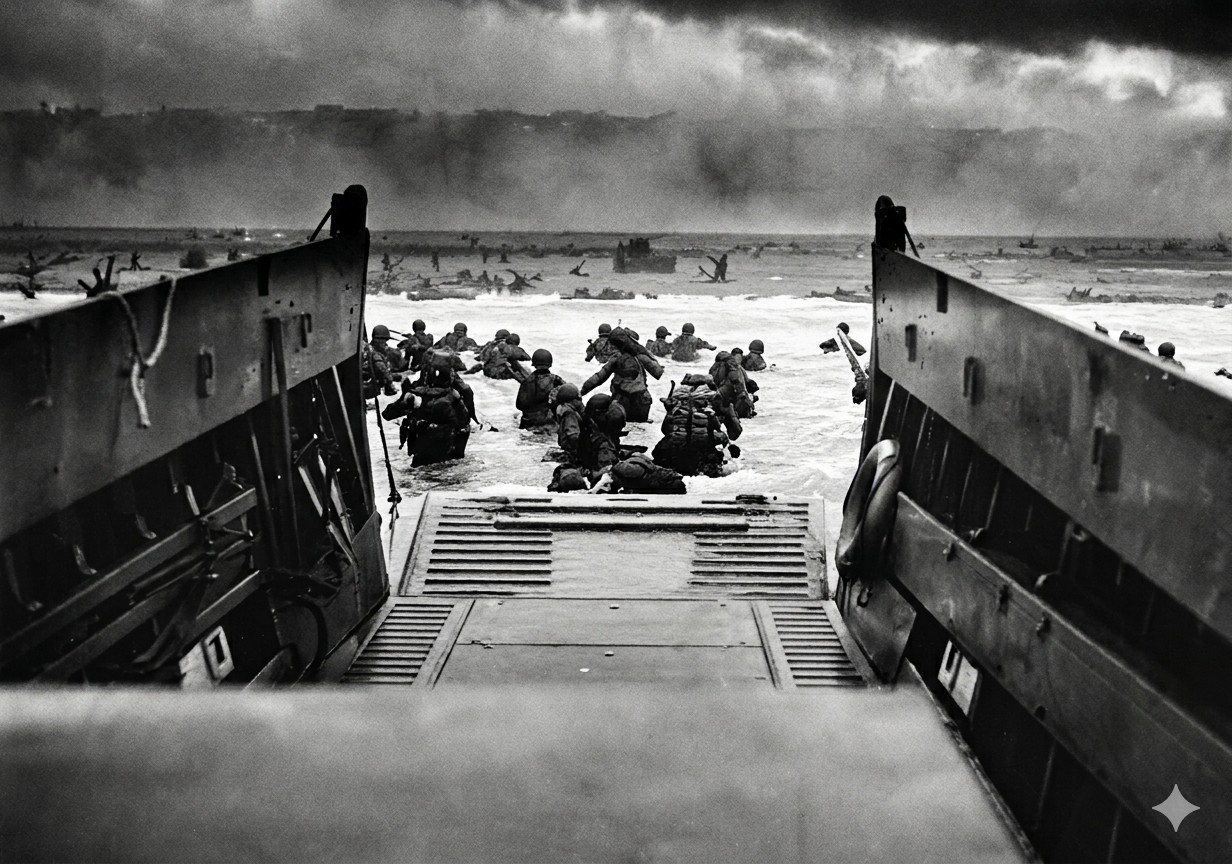
D-Day is observed each year on June 6 to honor the Allied soldiers who stormed the beaches of Normandy in 1944 and broke the grip of Nazi occupation over Western Europe. The scale of what was planned and executed that morning has few parallels in military history: a coordinated assault by land, sea, and air involving hundreds of thousands of troops moving against one of the most fortified coastlines ever constructed. What those men faced on the sand and in the surf was not abstract danger but concentrated, deliberate fire from positions built specifically to stop them. Generations since have measured their understanding of courage partly against what happened on that narrow strip of French coast.
D-Day History
The Normandy invasion was years in the making, its foundations laid as early as 1942 when Allied strategists began developing the framework for retaking German-occupied France. The challenge was not only moving an unprecedented force across the English Channel but doing so without the Germans knowing where or when the blow would land. Operation Bodyguard, the deception campaign that underpinned what the world now calls D-Day, deployed fake radio traffic, turned German agents into double agents, and constructed a fictional army group under General George Patton to convince enemy planners that the real strike would come at Pas-de-Calais rather than Normandy.
The invasion itself, code-named Operation Overlord, launched in the early hours of June 6, 1944, when 24,000 airborne troops parachuted into Normandy to secure bridges and block roads before dawn, setting conditions for the amphibious assault to follow. At 6:30 in the morning, 156,000 American, British, and Canadian troops began landing across five beaches designated Utah, Omaha, Gold, Juno, and Sword, pushing through the Atlantic Wall, a 2,400-mile German defensive line of bunkers, obstacles, and roughly four million landmines planted along the French coast. The fighting was brutal, especially at Omaha Beach, where terrain and positioning gave German defenders enormous advantage over men arriving in the open with nowhere to shelter.
June 5 had originally been scheduled as the date, but deteriorating weather forced Supreme Allied Commander Dwight Eisenhower to delay by twenty-four hours, a decision made under extraordinary pressure with the full knowledge that the window for favorable tides would not stay open long. When the operation concluded that day, more than 4,400 Allied personnel had been identified as killed, with thousands more lost at sea or unaccounted for. The landings did not end the war alone, but they cracked open a western front that Nazi Germany could not sustain, setting in motion the sequence of events that brought the conflict in Europe to a close the following spring.
Why D-Day Matters
Connecting Memory to Meaning
Veterans who witnessed D-Day firsthand are now extremely few, which means the responsibility of carrying that memory forward falls increasingly on institutions, educators, and individuals who did not experience it directly. Memorials, museums, and personal testimonies preserved in archives give each generation a way to engage with events that shaped the world they inhabit.
The Weight of Deliberate Sacrifice
Every man who crossed that beach did so knowing the odds and went anyway, which is a different category of courage than bravery born of ignorance or adrenaline. The soldiers who died at Normandy were not casualties of accident or miscalculation alone; they were people who understood the mission and accepted its cost.
A Hinge Point in Time
The outcome of the Normandy landings reshaped the trajectory of the twentieth century in ways that extended far beyond the battlefield. Had the invasion failed, the Allied ability to open a western front would have been severely delayed, with consequences for occupied populations across Europe that historians have long examined with sober attention. The success of that single day did not guarantee what came after, but it made the eventual outcome possible.
How to Observe D-Day
Let Cinema Fill the Gaps
Filmmakers have returned to the events of World War II repeatedly across more than seven decades, producing work that ranges from visceral combat recreation to intimate character studies and documentary testimony. Titles like Saving Private Ryan, The Longest Day, and Band of Brothers approach Normandy and its aftermath from different angles, each adding texture to a story too large for any single telling.
Wartime Story in Four Walls
The National World War II Museum in New Orleans, which opened in 2000, holds one of the most comprehensive collections of artifacts, personal testimonies, and immersive exhibits related to the conflict anywhere in the world. Its programming around June 6 typically includes dedicated presentations on the Normandy operation and the broader European theater. A visit does not require the anniversary as a prompt, but the date sharpens the experience.
Seek Out a Veteran's Story
Finding and listening to a recorded or written account from a World War II veteran, whether through a museum archive, a family collection, or a project like the Library of Congress Veterans History Project, turns abstract history into something grounded in a specific person's experience. The details that emerge from firsthand accounts consistently reveal things that no general history conveys.
Facts About D-Day
The Letter Eisenhower Prepared
Before the invasion launched, General Eisenhower drafted a message accepting full personal responsibility in case the operation failed, a document he kept in his pocket and fortunately never had to release.
Five Beach Names, Five Sectors
The five Normandy landing zones were assigned the code names Utah, Omaha, Gold, Juno, and Sword, with American forces taking Utah and Omaha while British and Canadian troops handled the remaining three.
Parachutes Dropped Before Dawn
The airborne component preceded the beach landings by several hours, with troops from the American 82nd and 101st Airborne Divisions and the British 6th Airborne Division dropping into Normandy under darkness.
The Atlantic Wall's Scale
Germany's coastal fortification system stretched approximately 2,400 miles from Norway to the Spanish border, requiring enormous labor and resources that diverted German construction capacity from other military priorities.
Weather Decided the Date
The final go decision rested largely on a narrow meteorological window identified by British forecaster Group Captain James Stagg, whose prediction of a brief improvement in conditions gave Eisenhower the basis for delaying one day and proceeding on June 6.
D-Day Dates
| Year | Date |
| 2026 | June 6 |
| 2027 | June 6 |
| 2028 | June 6 |