
World Green Roof Day - June 6, 2026
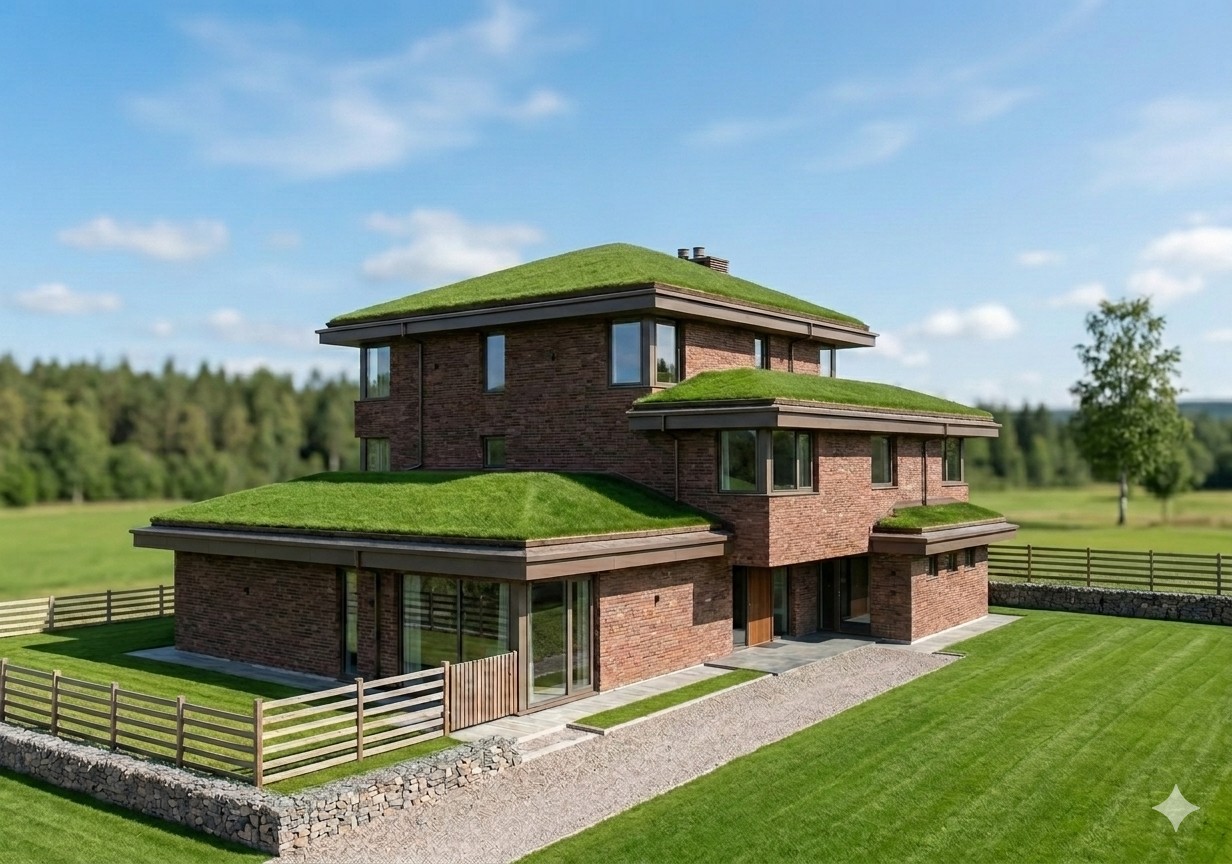
World Green Roof Day is observed every June 6 as a moment to look up and reconsider what the tops of buildings could be doing for the planet. A roof covered in living vegetation is not merely decorative; it actively manages heat, absorbs rainwater, filters air, and provides habitat in places where concrete has otherwise crowded nature out entirely. The idea has roots stretching back thousands of years, yet it feels more relevant today than at any point in between, as cities search for practical ways to soften the effects of a warming climate. Dusty Gedge and Chris Bridgman founded the occasion to give the movement a dedicated day of visibility and momentum.
World Green Roof Day History
Green roofs predate the modern building industry by several millennia. The Hanging Gardens of Babylon, counted among the seven wonders of the ancient world and located in what is now Iraq, are thought to have incorporated vegetation grown across stone terraces and elevated structures as far back as 500 B.C., with descriptions in Assyrian, Greek, and Roman texts pointing to trees and mountain flora cascading over architectural forms. Norse communities developed their own version during the Middle Ages, layering sod and grass over birch bark membranes to create insulated dwellings that could withstand brutal Scandinavian winters, and remnants of those structures survive in excavated form to this day.
The modern movement took shape in Germany, where Gerda Gollwitzer and Werner Wirsing published a foundational text on inhabitable and vegetated roof surfaces in the early twentieth century. Public investment followed when the German government commissioned a living roof at the GENO Pharmaceuticals headquarters in 1969, giving the concept institutional credibility. World Green Roof Day draws directly from this tradition of treating rooftops as ecological infrastructure rather than wasted space, and by the mid-1990s Germany had covered roughly 13 million square meters of rooftop with vegetation as interest in sustainable architecture accelerated through the 1970s and 1980s.
The United States entered the picture in the 1930s, when the Rockefeller Center in New York incorporated planted terraces into its design. Progress was slow for decades, but shifting attitudes toward sustainability eventually pushed cities to act more deliberately. San Francisco, New York, and several other municipalities began offering tax credits to developers who integrated living roofs into new construction, and the practice spread beyond North America to Canada, Egypt, Costa Rica, and across most of Europe. Today the global market for green roofing continues to expand as building codes in multiple countries start treating vegetation as a structural requirement rather than an optional feature.
Why World Green Roof Day Matters
Rainwater Finds New Purpose
During heavy rainfall, impermeable urban surfaces channel water directly into drainage systems that can quickly become overwhelmed, leading to the street flooding that damages infrastructure and contaminates water supplies. A living roof absorbs a substantial share of that rainfall through soil and root systems, releasing it slowly through evaporation and dramatically reducing the volume and speed of runoff reaching the drains below.
Breathing Better With Plants
Vegetation draws particulates, carbon dioxide, and airborne pollutants through its leaves, returning cleaner air to the surrounding environment in a process that requires no energy input and no maintenance beyond keeping the plants alive. Living roofs positioned across a dense urban area create a distributed filtration network that supplements whatever formal air quality infrastructure a city operates.
Cooling Cities From Above
Dense urban areas trap heat in ways that surrounding countryside does not, and living roofs directly counter that effect by replacing heat-absorbing surfaces with vegetation that cools through evaporation. Widespread installation across a city's building stock can measurably reduce ambient temperatures at street level, easing the burden on air conditioning and cutting the energy consumption that drives further warming.
How to Observe World Green Roof Day
Plan a Leafy Gathering
Rooftop gardens and green terraces already function as social spaces in many cities, and using one for a small gathering on this occasion turns the infrastructure into an experience. If you have access to a planted rooftop, inviting a few people up for the afternoon gives them a direct sense of what living architecture feels like from the inside. That firsthand experience tends to convert curiosity into genuine enthusiasm in ways that photographs alone rarely manage.
Spread the Word Today
Most people have never thought seriously about rooftops as environmental infrastructure, and a conversation that opens that idea tends to stick. Sharing the basic facts, what living roofs do for heat, air quality, and water management, with people in your circle plants a seed that may influence decisions down the line, from a neighbor's renovation project to a local council's planning policy.
Document What You See
Walking through a city with attention to what sits on top of buildings reveals green roofs that most people pass without noticing, and photographing them creates a record worth sharing. Posting images with the hashtag WGRD connects individual observations to a global conversation happening in dozens of countries simultaneously.
Facts on Vegetated Architecture
Iceland Still Uses Turf
Traditional Icelandic turf houses, structurally identical in principle to Norse sod roofs, remained in common residential use until the mid-twentieth century, making them among the longest-running examples of living roof construction in history.
Chicago Leads North America
The city of Chicago has installed more green roof surface area than any other municipality in North America, with the City Hall building's rooftop garden serving as a flagship demonstration project since 2001.
Weight Is the Main Constraint
A fully saturated extensive green roof adds between 60 and 150 kilograms per square meter to a structure, meaning that most retrofitting projects require an engineering assessment before any soil or vegetation is installed.
Birds Colonize Them Quickly
Surveys of urban living roofs in Switzerland and the United Kingdom found that several threatened bird species, including the black redstart, adopted rooftop habitats within a single breeding season of installation.
Germany Mandates Them Now
Multiple German cities including Stuttgart and Frankfurt have introduced bylaws requiring green roofs on new commercial and residential buildings above a certain footprint, moving the technology from incentivized option to legal baseline.
World Green Roof Day Dates
| Year | Date |
| 2026 | June 6 |
| 2027 | June 6 |
| 2028 | June 6 |