
World Pest Day - June 6, 2026
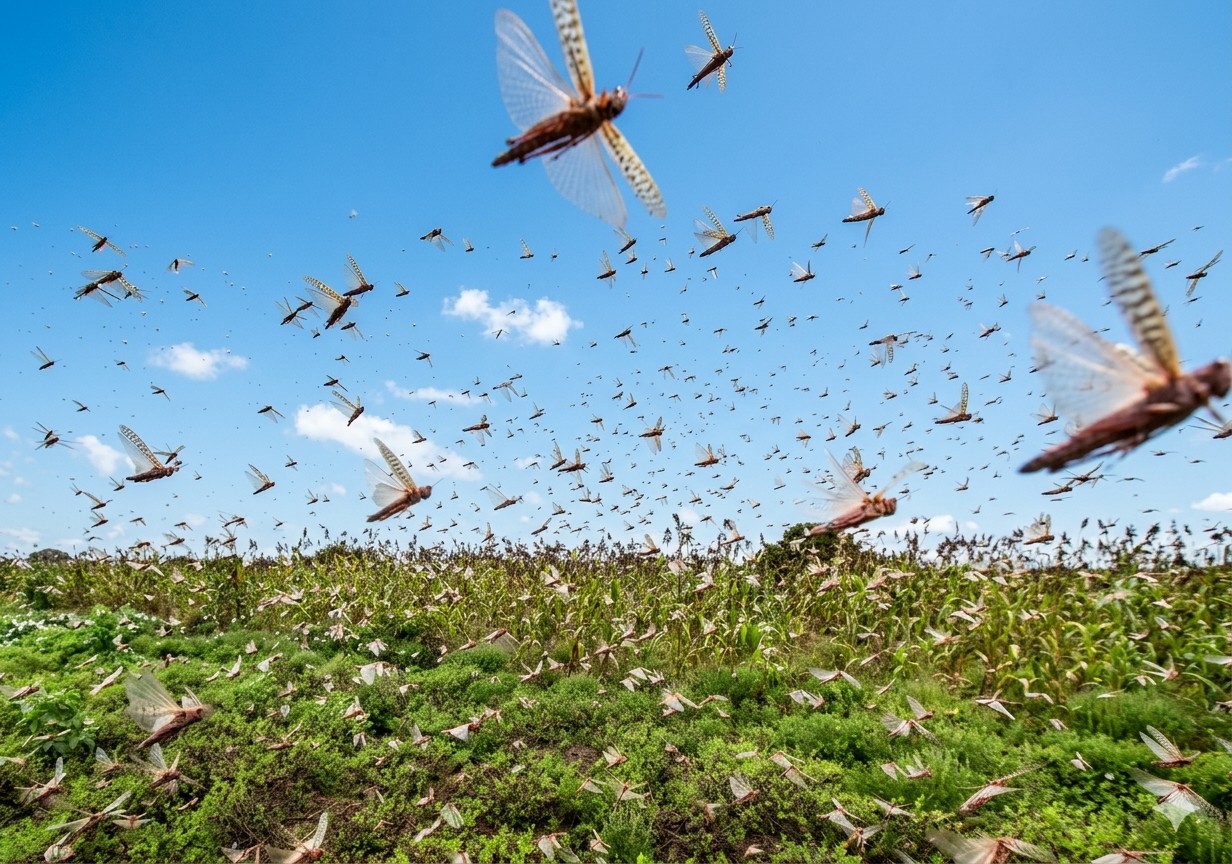
World Pest Day is observed on June 6 to focus professional and public attention on the science of managing the organisms that threaten human health, agriculture, and the built environment. Mosquitoes, termites, rodents, and dozens of other species cause damage that ranges from personal inconvenience to civilizational crisis, and the methods humans have developed to counter them fill several thousand years of recorded history. Sharing the planet with billions of other species requires deliberate strategy, not just the hope that nothing will move in.
World Pest Day History
Pest pressure on human food supplies is as old as farming itself, but the first documented solution appeared around 3000 B.C. in Egypt, where granary managers positioned cats near stored grain not as companions but as working hunters. Mongooses were brought into homes on the same logic, placed deliberately where snakes and rodents were most likely to appear. The thinking was entirely practical: one species deployed to neutralize another, and it worked well enough to be recorded and repeated for generations.
Independent experiments were running simultaneously across the ancient world, each arriving at different answers. By 2500 B.C. Sumerian farmers in Mesopotamia were dusting their crops with sulfur compounds, a chemical approach that preceded any scientific understanding of why it killed insects. Chinese growers pushed further still by 1200 B.C., transporting predatory ant colonies in bamboo tubes between citrus trees to hunt beetles and caterpillars, and treating seeds with botanical extracts before planting. Three civilizations, no contact between them, all concluding the same thing: infestation had to be fought on purpose or harvests would not survive.
Pest management moved from intuition to invention as the centuries advanced. The Renaissance recovered chemical knowledge that Europe had abandoned in favor of superstition, reintroducing arsenic and nicotine as effective repellents. Franz Ernst Brückmann engineered a mechanical flytrap in the 1700s and later a flea trap so finely crafted in silver and ivory that it circulated as a fashion accessory in Victorian society. James M. Keep patented a cast-iron spring-loaded mousetrap in 1879, and the twentieth century layered D.D.T., organophosphates, and chlorinated hydrocarbons on top of everything that came before, until the ecological damage of those chemicals triggered a serious reassessment in the 1960s. World Pest Day was founded in 2017 by the Chinese Pest Control Association together with the National Pest Management Association, the Federation of Asian and Oceania Pest Managers' Association, and the Confederation of European Pest Management Associations to bring that entire arc of history into public awareness.
Why World Pest Day Matters
Harvests Depend on Management
Insects, fungi, rodents, and weeds collectively destroy between 20 and 40 percent of global crop production every year before food ever reaches a market or a plate. In regions already stressed by drought or conflict, that margin is the difference between subsistence and famine. Coordinated management strategies, shared across borders and backed by research, are among the most cost-effective tools available for protecting the food supply that the entire human population depends on.
Illness Prevention Starts Outside
Mosquitoes transmit malaria, dengue, and several other diseases that collectively affect hundreds of millions of people each year, while rodents spread hantavirus and leptospirosis through contact with food and water sources. Cockroaches trigger asthma attacks and carry bacterial pathogens on their bodies that contaminate kitchen surfaces and stored food.
Industry Standards Rise
Pest management left to individual improvisation produces inconsistent and sometimes dangerous outcomes, and this occasion creates pressure for professionals and regulatory bodies to align around evidence-based practices. When the industry gathers around a shared calendar moment, it tends to generate new benchmarks, updated training requirements, and clearer guidelines that raise the floor for what acceptable service looks like.
How to Observe World Pest Day
Connect With Industry Experts
Conferences, webinars, and local trade gatherings organized around this occasion bring together researchers, regulators, and practitioners who rarely share the same room. For professionals, that proximity accelerates the spread of new techniques and creates the kind of informal knowledge exchange that formal publications can't fully replicate. For curious members of the public, attending even a small local session tends to be more informative and surprising than expected.
Go Biological at Home
Chemical sprays kill indiscriminately and leave residues that can affect children, pets, and beneficial insects like pollinators that gardens depend on. Neem oil, diatomaceous earth, and pheromone traps address specific targets without the broader collateral effects, and companion planting strategies can deter many common garden pests before they establish.
Book a Professional Inspection
Many households carry infestations they are only partially aware of, since termites, bed bugs, and certain rodent species are expert at staying out of sight until the damage becomes severe. Scheduling a full inspection with a licensed operator gives an accurate picture of what is actually present and what level of intervention is warranted. Acting on that information before a problem escalates is consistently cheaper and less disruptive than treating an advanced infestation.
Facts on Managing Tiny Invaders
Felines Earned Their Keep
Domestic cats were likely first kept by humans in ancient Egypt specifically to protect grain stores from rodents, making pest suppression one of the original reasons for human-animal domestication.
Fleas Reshaped a Continent
The bubonic plague, carried by fleas living on infected rats, killed an estimated one-third of Europe's population during the fourteenth century, demonstrating the civilizational stakes of unmanaged infestation.
D.D.T. Was Once Celebrated
Dichlorodiphenyltrichloroethane won its inventor Paul Hermann Müller the Nobel Prize in Physiology or Medicine in 1948 before its ecological damage led to a near-global ban in the 1970s and 1980s.
One Termite Colony Eats Constantly
A mature termite colony of around 60,000 workers can consume roughly one foot of a 2x4 pine board in just over five months, making early detection critical for protecting wooden structures.
Predators Deployed Against Invaders
The practice of using one organism to suppress another was formalized in 1888 when California introduced the vedalia beetle from Australia to suppress cottony cushion scale insects devastating its citrus industry, a project that succeeded within two years.
World Pest Day Dates
| Year | Date |
| 2026 | June 6 |
| 2027 | June 6 |
| 2028 | June 6 |