
National Button Battery Awareness Day - June 12, 2026
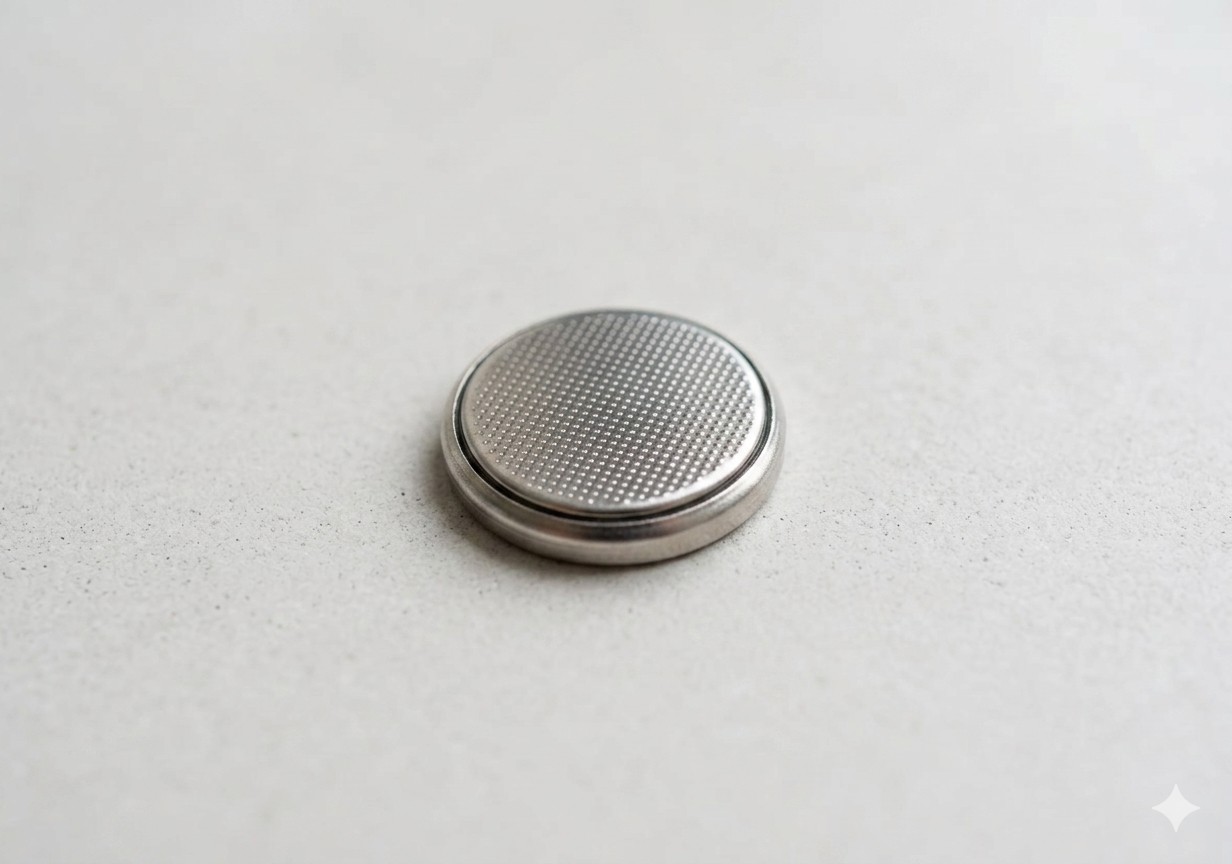
National Button Battery Awareness Day falls on June 12 to raise awareness about the hidden dangers of button batteries, small disc-shaped cells found in countless everyday household items. These batteries are compact enough to be swallowed by a young child in an instant, and the damage they cause can begin within minutes of ingestion. The occasion grew out of a family's grief after losing a toddler whose death could have been prevented with wider public knowledge. Keeping that knowledge alive and spreading it further is the purpose this day serves each year.
National Button Battery Awareness Day History
Button batteries are thin, flat, and unassuming, but once lodged in a child's esophagus they become immediately dangerous. Each cell has a positive and a negative side, and when it makes contact with tissue it generates an electrical current that causes chemical burns, destroying surrounding tissue rapidly. The mechanism is not obvious to most parents, which is exactly why Dr. Thomas McGill, a surgeon at University Medical Center in Lubbock, Texas, and other medical professionals began using demonstrations to illustrate it, placing a button battery between slices of ham and showing audiences how it begins burning through the tissue in under thirty minutes. National Button Battery Awareness Day was founded in 2021 by Trista Hamsmith, a mother from Lubbock who established the observance after losing her daughter Reese at eighteen months of age.
Reese had swallowed a button battery that went undetected long enough to cause severe damage to her esophagus before surgery could remove it. Dr. McGill successfully extracted the battery at University Medical Center, but the burn had already created a large hole in the child's throat, allowing air and food to enter areas where they could not safely go. Surgeons at Texas Children's Hospital in Houston attempted to repair the damage, but the injury was too extensive. Reese died six weeks after the battery was removed. Trista described the period as a living nightmare, and said that the support of friends, family, and strangers in their community was the only thing that carried her through it.
When the family's story became widely shared online, some responses blamed Trista for negligence, suggesting that a more attentive parent would have prevented the accident. Rather than retreating, she used that reaction as motivation to speak publicly and correct the assumption. Her position was straightforward: these accidents do not happen because a parent looked away for too long, but because the danger is not well understood and the batteries are not adequately secured in the products that contain them. The awareness day she created is her effort to ensure that other families receive the information the Hamsmiths did not have in time.
Why National Button Battery Awareness Day Matters
Pressure Produces Results
Industry advocacy linked to this observance has contributed to real changes in how some manufacturers approach button battery safety. Several companies have begun coating batteries with bitter substances to discourage ingestion, and others have redesigned compartments to require tools for access. Each improvement that reaches the market represents a direct outcome of the public pressure that days like this one help sustain.
Awareness Protects Children
A parent who knows what a button battery can do inside a child's body is far better equipped to act quickly if an ingestion is suspected. Emergency response time matters enormously with these injuries, since the electrical burn begins within two hours of contact and worsens with every minute. Spreading that knowledge through this occasion has the potential to reduce the number of children who suffer permanent damage or do not survive the experience.
Hidden in Plain Sight
Button batteries are present in remote controls, keyless entry fobs, flameless candles, musical greeting cards, hearing aids, and small toys, making them nearly impossible to avoid entirely in a modern household. Most of these devices are not designed with child safety as a priority, and battery compartments are frequently easy to open. Understanding which products in a home contain them is the first step toward reducing the risk they pose to young children.
How to Observe National Button Battery Awareness Day
Pass the Information Along
Sharing what this observance is about with other parents, posting about it, or simply mentioning Reese's story to someone who has never heard it costs nothing and can change how that person thinks about the devices in their own home. Awareness that stays within a single household has limited reach, while information passed between parents and caregivers compounds over time. The story Trista Hamsmith chose to tell publicly was never meant to stay small.
Talk to the Kids
Children old enough to understand basic safety concepts benefit from a direct, age-appropriate conversation about why button batteries are not to be touched or put in their mouths. Framing it around what the battery does rather than simply saying it is dangerous tends to be more effective, since it gives children something concrete to remember. Extending the conversation to grandparents and other caregivers who spend time with young children makes the information more complete.
Check Every Device at Home
Going through the household and identifying every item that contains a button battery is a practical starting point that takes less time than most people expect. Checking whether each compartment closes securely and cannot be opened without deliberate effort gives an accurate picture of where the real risks are. Any device with a loose or broken compartment should be repaired, secured with tape, or removed from spaces accessible to children.
Facts About Button Batteries
Thousands of Injuries Annually
In the United States alone, emergency rooms treat an estimated 3,500 children each year for injuries related to button battery ingestion.
Twenty-Volt Danger
The most hazardous button batteries are lithium cells operating at three volts, which generate enough current to cause tissue damage within as little as two hours of contact.
Not Just Swallowing
Button battery injuries also occur when children insert them into their noses or ears, where the same electrical burn mechanism causes serious damage to surrounding tissue.
Packaging Has Improved
Following pressure from safety advocates, some manufacturers in the United States began implementing child-resistant packaging for button batteries starting in the early 2010s.
The Reese's Law Connection
In 2022, the United States Congress passed Reese's Law, named after Reese Hamsmith, requiring child-resistant closures on consumer products containing button batteries.
National Button Battery Awareness Day Dates
| Year | Date |
| 2026 | June 12 |
| 2027 | June 12 |
| 2028 | June 12 |