
Raggedy Ann and Andy Day - June 12, 2026
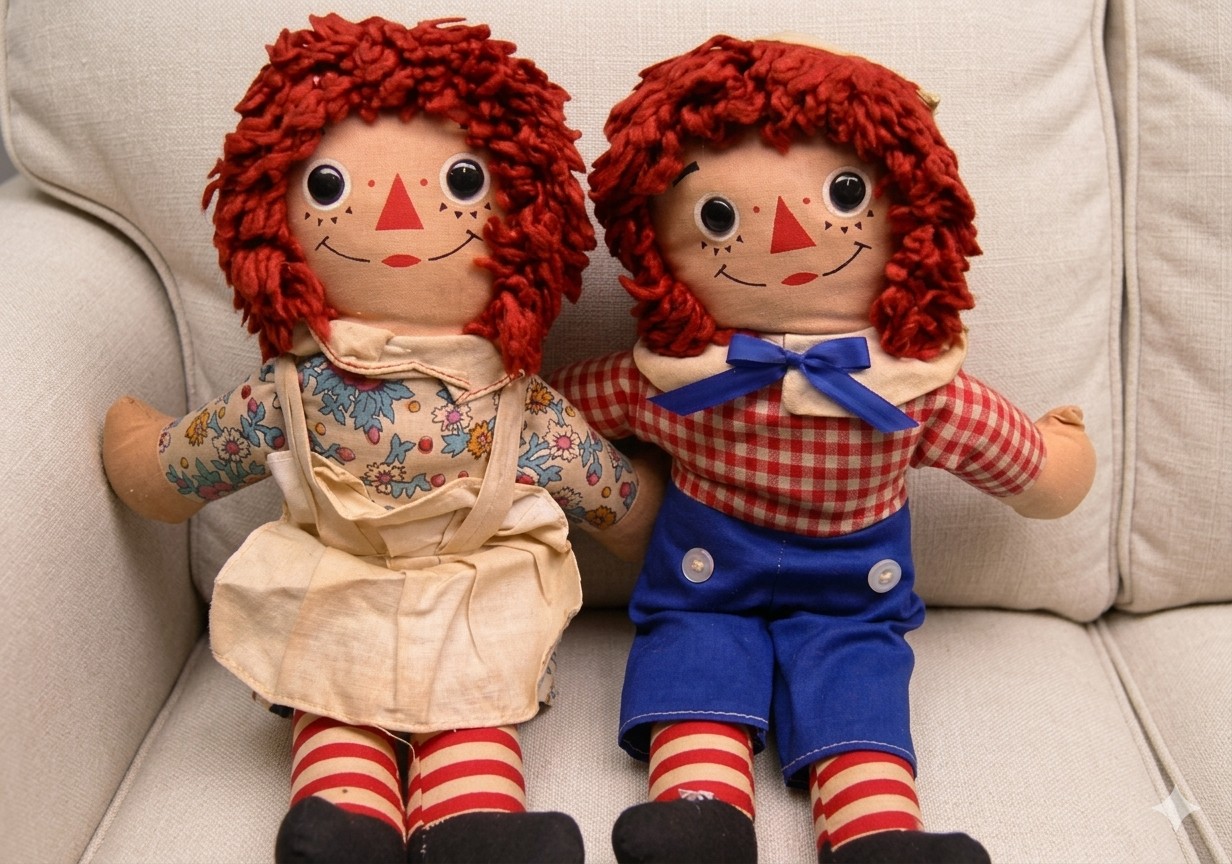
Raggedy Ann and Andy Day falls on June 12 to mark the legacy of two cloth doll characters that shaped how generations of American children thought about toys and imagination. The pair began as a single handmade doll with red yarn hair and a hand-drawn face, and grew into a franchise spanning books, cartoons, clothing, and merchandise across most of the twentieth century. What made them endure was simplicity: a soft, floppy doll that felt approachable and warm rather than polished and distant. For anyone who grew up with them, the occasion is an easy prompt to pull out an old book or track down a doll sitting in a box somewhere.
Raggedy Ann and Andy Day History
Raggedy Ann began as a cloth doll discovered in a grandmother's attic, faceless and forgotten, until the man who would make her famous decided she deserved better. That man was Johnny Gruelle, a newspaper cartoonist whose father was a painter, who had already demonstrated his gifts for children's storytelling by winning first prize in a comic drawing contest sponsored by the New York Herald in 1910. When his daughter brought the worn cloth doll home, Gruelle drew a face on it, replaced a missing eye with a shoe button, and gave it red yarn hair and a triangular nose, creating the look that would become instantly recognizable across the country. Raggedy Ann and Andy Day was introduced to keep that origin story alive and to celebrate the broader world Gruelle built around a single repaired doll.
Gruelle channeled his affection for the character into a series of illustrated children's books, where Ann quickly gained companions and adventures that expanded her world considerably. Her brother Andy, known as Raggedy Andy, was introduced in 1920 as the natural counterpart to Ann, and the two became a pair that readers expected to find together. The books multiplied rapidly, with over a thousand stories eventually written about the characters across various authors and editions. That volume of storytelling reflected genuine audience demand rather than simple commercial momentum, and it cemented the duo as fixtures of American childhood literature rather than passing novelties.
As the books spread, the characters moved into other formats and products that extended their reach well beyond the page. Cartoons brought Ann and Andy to a visual audience that might not have encountered the books, and their likenesses appeared on children's clothing, bedding, and household items throughout the mid-twentieth century. The transition from handmade doll to mass-produced franchise was complete by the time most baby boomers were growing up, which is why the characters carry such strong nostalgic associations for that generation and the ones that followed.
Why Raggedy Ann and Andy Day Matters
Stories That Still Resonate
The books Gruelle wrote and illustrated around these characters were built on warmth, curiosity, and the logic of a child's imagination, qualities that hold up better over time than the clever or ironic tone that often defines children's media today. Sharing them with younger readers introduces a different kind of storytelling, slower and more gentle, that offers a contrast worth experiencing.
A Franchise That Left Its Mark
The commercial success of Raggedy Ann and Andy was significant enough to sustain decades of production across dolls, books, and media, employing illustrators, writers, manufacturers, and retailers throughout its peak years. The characters also shaped what American toy culture looked like during a formative period, influencing how publishers and manufacturers thought about translating a single character across multiple formats.
Nostalgia Worth Revisiting
The Raggedy Ann doll occupied a specific place in childhood that more sophisticated toys could not easily fill: soft, unthreatening, and designed for imaginative play rather than structured interaction. Returning to the characters as an adult often surfaces memories that had been dormant for years, and the experience of revisiting them tends to be warmer than expected.
How to Celebrate Raggedy Ann and Andy Day
Screen the Animated Film
The 1977 animated film Raggedy Ann and Andy: A Musical Adventure brought the characters to life in a format that a new audience can encounter without any prior familiarity with the books or dolls. Watching it with family or friends who have their own memories of the characters turns the screening into a shared experience. The film's hand-drawn style and musical sequences capture the spirit of the original stories in a way that holds up as a piece of American animation history.
Revisit the Stories
The original Raggedy Ann books are short enough to read in a single sitting and hold up well for adults returning to them after decades. Reading one aloud to a child in the family is a straightforward way to pass the characters on to someone who may not have encountered them before. Libraries frequently carry early editions, and digital versions are available for titles old enough to have entered the public domain.
Display Your Collection
Anyone who has held onto Raggedy Ann and Andy dolls, books, or related objects has a collection that deserves to be seen rather than stored. Setting up even a small display at home, at a library, or at a community space invites others to engage with the history of the characters and often surfaces memories in people who encounter it unexpectedly. Photographs of a collection shared online can extend that reach further.
Facts About Raggedy Ann and Andy
The Doll Predates the Books
Gruelle received a patent for the Raggedy Ann doll in 1915, two years before the first Raggedy Ann book was published in 1918, making the toy the origin of the franchise rather than a product of it.
A Museum Dedicated to the Characters
The Raggedy Ann and Andy Museum in Arcola, Illinois, is one of the few museums in the United States dedicated entirely to a fictional doll character and its creator.
Gruelle's Daughter Inspired the Name
The name Raggedy Ann was reportedly inspired by two poems by James Whitcomb Riley, "The Raggedy Man" and "Little Orphant Annie," which Gruelle admired and combined for the character.
Andy Arrived Later Than Ann
Raggedy Andy did not appear until 1920, three years after the first Ann book, and his stories were collected in a separate volume before the two were regularly featured together.
The Heart Detail
The original Raggedy Ann dolls included a candy heart sewn inside the chest with the words "I love you" printed on it, a detail that became a signature feature of the character.
Raggedy Ann and Andy Day Dates
| Year | Date |
| 2026 | June 12 |
| 2027 | June 12 |
| 2028 | June 12 |