
National Jerky Day - June 12, 2026
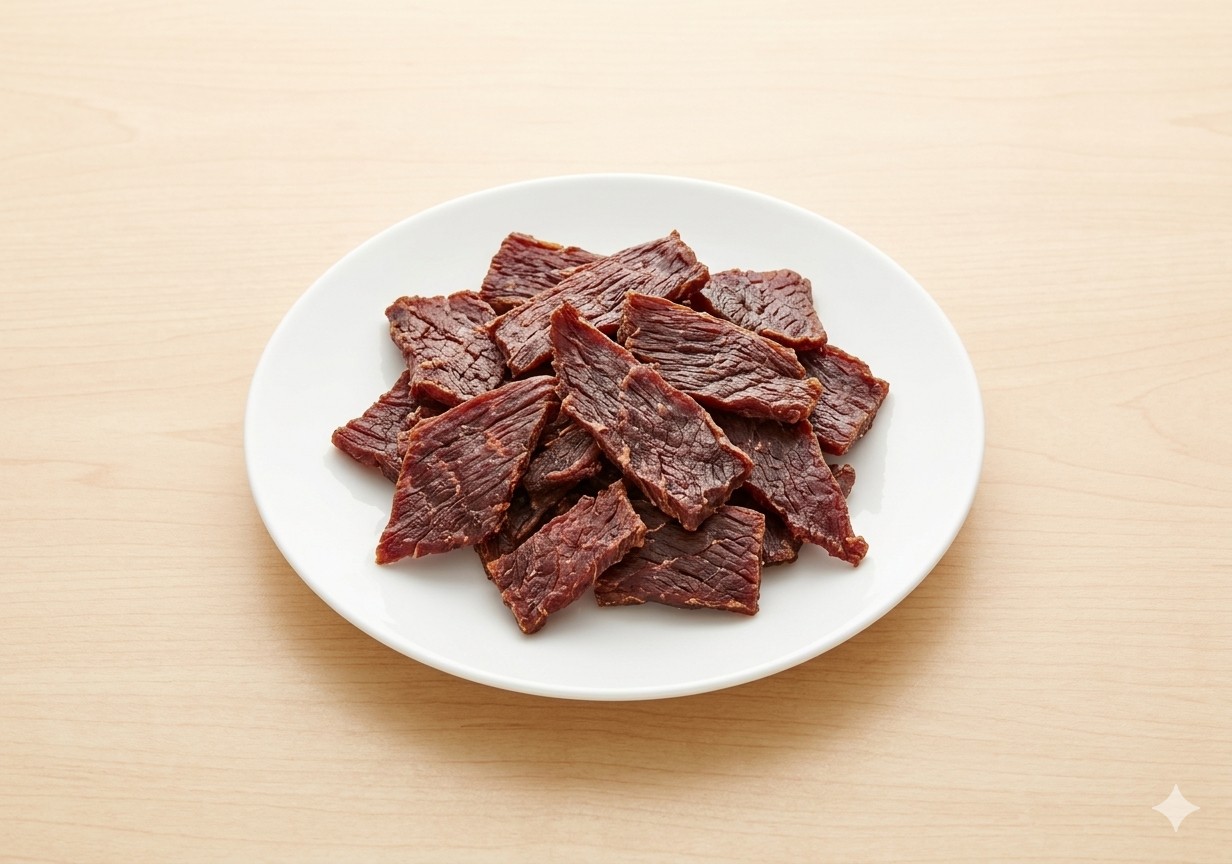
National Jerky Day is celebrated annually on June 12 as a nod to a snack that has been keeping people fed and moving for thousands of years. Jerky is meat that has been sliced thin, dried, and often seasoned with salt and spices, a process that removes moisture and extends shelf life without refrigeration. The category is broader than most people realize: beef is the most familiar version, but jerky can be made from turkey, salmon, venison, and more exotic options like kangaroo or alligator. What started as a survival technique for nomadic cultures has turned into a global snack industry with a devoted following.
National Jerky Day History
Jerky earned its name from a long linguistic journey that began in the Andes. The Quechua word ch'arki, meaning dried salted meat, passed into Spanish as charqui when Spanish colonizers encountered the preserved meat practices of Andean peoples in South America, and the word was eventually anglicized into the English jerky. The practice behind the word predates that contact by centuries: nomadic and hunter-gatherer societies across multiple continents had long relied on dried meat as a way to carry protein through long journeys without spoilage. Native American tribes prepared their own versions from buffalo, sometimes combining the dried meat with rendered fat and dried fruit to create pemmican, a dense and portable food designed to sustain travelers over great distances. National Jerky Day was created in 2012 to give this ancient food its modern moment of recognition.
The formal observance came from the commercial side of the industry, launched by Jack Link's Beef Jerky and the Wisconsin Beef Council, two major players in the American meat market who saw an opportunity to build enthusiasm around a growing product category. Consumer data at the time showed that demand for meat snacks was rising fast, trailing only potato chips among salty snack categories. By anchoring a dedicated day to the product, the founders helped turn what had been a gas station staple into something worth celebrating more deliberately. The effort worked: jerky has since expanded well beyond convenience store shelves and into specialty shops, subscription boxes, and upscale grocery aisles.
Today the jerky market spans dozens of meat types, flavor profiles, and preparation methods, reflecting both the product's deep roots and its capacity to adapt to changing tastes. Cultures around the world have their own equivalents: South African biltong, Chinese rou gan, and Scandinavian dried reindeer meat all share the same basic logic of removing water to preserve protein. In the United States the snack is effectively ubiquitous, available everywhere from highway rest stops to high-end food halls, and the range of options has expanded far enough that finding an unusual variety has become part of the appeal.
Why National Jerky Day Matters
Protein Without the Bulk
Dehydration removes the majority of the water weight from meat, concentrating its protein, iron, and zinc into a much smaller package. A single ounce of beef jerky typically contains around ten grams of protein with relatively little fat, making it a more nutritionally efficient snack than many alternatives. For anyone watching their intake or simply trying to eat something that actually satisfies, that ratio is worth paying attention to.
Something for Every Palate
The range of flavors and styles available in the jerky category has grown well beyond the salty baseline most people grew up with. Teriyaki, peppered, honey glazed, extra spicy, and smoke-forward variations are now standard in most markets, and the underlying meat itself can vary just as widely. That flexibility makes it possible to find a version that suits almost any taste preference without much effort.
Ready Whenever You Are
Jerky requires no preparation, no refrigeration, and no utensils, which makes it practical in a way that most protein sources are not. It fits into a hiking pack, a carry-on bag, or a desk drawer without any special handling. For people who need reliable fuel during long days or travel, that combination of portability and nutritional density is genuinely useful rather than just convenient.
How to Celebrate National Jerky Day
Support SP4K
The organization SP4K, founded in 2010 by Dyron and Kelly Howell after encountering food-insecure children in Amarillo, Texas, provides protein-rich snack packs to kids who depend on school meals as their primary food source. These packs include jerky products such as SP4K Beef Stiks from Clint and Sons. Contributing to or sharing information about the organization on this occasion connects the enjoyment of the day to something genuinely useful for children in need.
Make a Batch at Home
Homemade jerky requires a marinade, thinly sliced meat, and either an oven set to low heat or a food dehydrator, and the process is more forgiving than most people expect. Choosing the marinade is where most of the creative work happens: soy sauce, Worcestershire, garlic, chili flakes, and brown sugar are common starting points that can be adjusted freely.
Branch Out and Try Something New
If your usual choice is a familiar beef variety, this is a good occasion to pick up something outside your normal range. Salmon jerky, turkey jerky, and venison jerky each have distinct textures and flavor profiles that are easy to miss when a preferred option is always within reach. Trying two or three types side by side makes the differences more apparent and often turns up a new favorite.
Facts About Jerky
Biltong Is Not Jerky
South African biltong is often compared to jerky but differs in that it is air-dried rather than heat-dried and is typically cut from thicker pieces of meat, producing a different texture and flavor profile.
The Market Size
The global jerky and meat snack market was valued at several billion dollars by the early 2020s, reflecting the snack's steady expansion from regional staple to international product category.
Astronaut Food
Beef jerky has been included in NASA space mission food supplies because its light weight, long shelf life, and high protein content make it practical for environments where storage and preparation are severely limited.
Indigenous Pemmican Recipes Varied
Different Native American tribes had distinct pemmican recipes, with the specific combination of dried meat, fat, and berries varying significantly by region and season.
Low Moisture Is the Key
Jerky is safe to store at room temperature because its moisture content is reduced to below 0.85 water activity, a level at which most harmful bacteria cannot grow or reproduce.
National Jerky Day Dates
| Year | Date |
| 2026 | June 12 |
| 2027 | June 12 |
| 2028 | June 12 |