
International Falafel Day - June 12, 2026
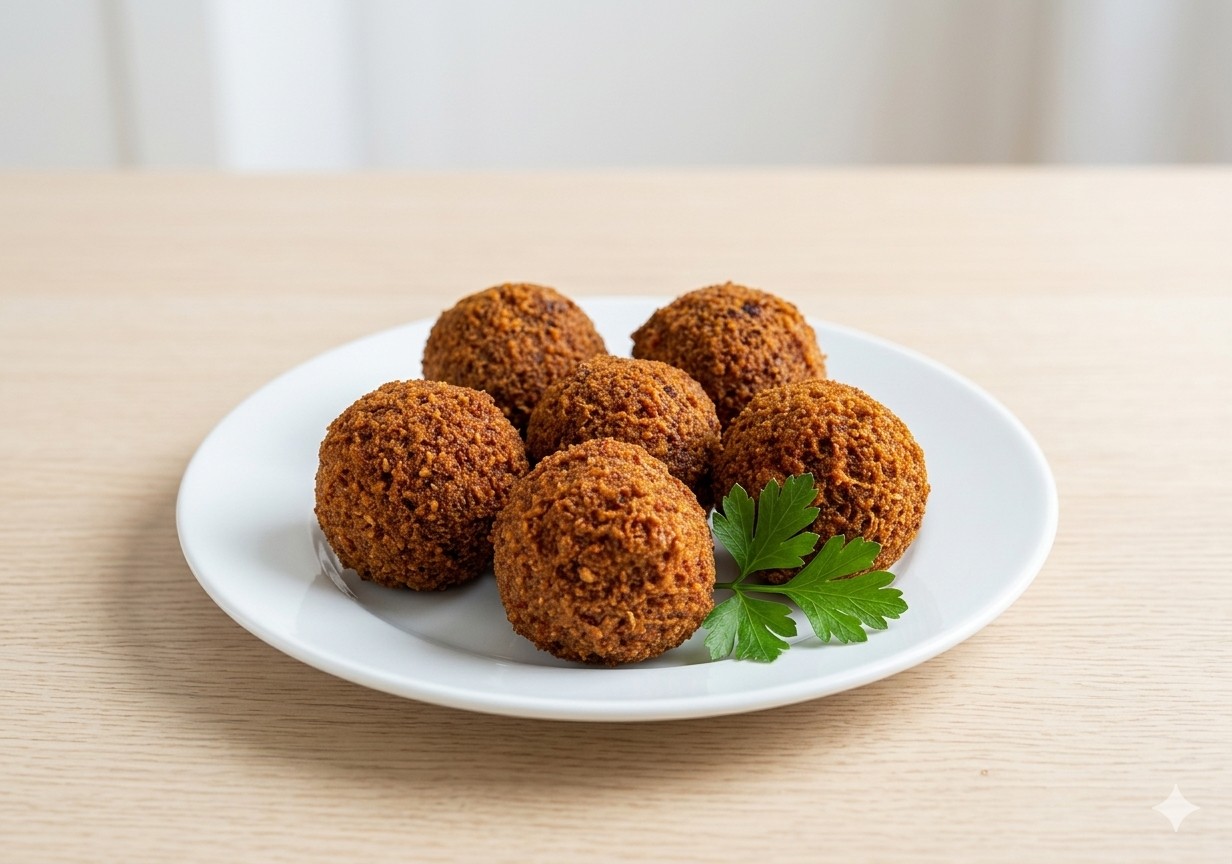
International Falafel Day is marked on June 12 to draw attention to a street food that has crossed continents and embedded itself into cuisines far beyond its region of origin. Falafel is made from ground chickpeas or fava beans blended with herbs and spices, then shaped and deep-fried until crisp on the outside and tender within. It fits into a pita, sits on a plate alongside hummus and fresh vegetables, or disappears straight from a paper wrapper on a busy street corner. The dish carries no meat or dairy, which has made it a reliable option for vegetarians and vegans across the globe.
International Falafel Day History
Falafel is a dish with a disputed past and a remarkably well-traveled present. The most frequently cited origin story places it in Egypt, where Coptic Christians are said to have eaten a fava bean version during Lent as far back as the 4th century, though no written evidence from that period survives to confirm it. What historians generally agree on is that the earliest versions of the dish relied on fava beans rather than chickpeas, and that the chickpea variation came later, as falafel moved northward through the Levant and adapted to local ingredients. International Falafel Day was established in 2012 by the co-founder of Innovation Israel, an organization that chose the occasion to draw attention to a dish deeply embedded in Middle Eastern culture.
As falafel spread across the region it became a fixture of street food culture throughout the Middle East, commonly served as part of a meze alongside small plates of salads, dips, and pickled vegetables. The dish arrived in North America through Jewish immigrant communities who brought it to neighborhoods and small eateries in cities where Middle Eastern food was otherwise hard to find. By 1970 it had caught on more broadly, appearing at food stands and casual restaurants that catered to a growing appetite for affordable, filling, meatless options. Germany developed its own strong falafel culture in the twentieth century, driven in part by a large Turkish and Arab immigrant population that brought the dish into mainstream urban life.
Today falafel turns up on menus far outside its original geography, from fast food chains offering plant-based alternatives to grocery stores stocking dry mixes for home cooking. Its appeal crosses dietary lines: it works as a snack, a main course, or a component of a larger spread. The observance created around it each June gives food lovers a reason to engage more deliberately with its history, try new preparations, and appreciate how a simple fried ball of ground legumes became a genuinely global food without requiring much adaptation along the way.
Why International Falafel Day Matters
A Dish That Crosses Borders
Few foods tell a story of cultural exchange as clearly as falafel, which has moved from ancient Egypt through the Levant, across Europe, and into the Americas while remaining recognizable at every stop. Each region has added its own preferred spices, accompaniments, or serving styles without fundamentally altering what the dish is. Pausing to think about that journey on a designated day puts food culture in a context that goes well beyond what is on the plate.
Nutrition Worth Noting
Chickpea-based falafel delivers a meaningful amount of plant protein, fiber, and complex carbohydrates in a compact form that does not rely on processed ingredients or artificial additives. The legumes at its core also provide iron, folate, and a range of other nutrients that make it more than just a satisfying snack. For people navigating a diet without meat, it represents one of the more complete and genuinely enjoyable sources of nutrition available.
No One Gets Left Out
Falafel asks very little of the person eating it in terms of dietary restrictions. It contains no meat, no dairy, and no eggs, which puts it within reach of vegans, vegetarians, and anyone avoiding animal products for health or ethical reasons. That kind of broad accessibility is genuinely rare in street food, and it is a large part of why falafel has traveled so well across cultures and communities.
How to Celebrate International Falafel Day
Pass It Along
Introducing falafel to someone who has never tried it is one of the more effortless ways to mark the occasion, since the dish tends to convert skeptics quickly. Bringing a homemade batch to share at work, cooking it for family, or simply recommending a good local spot to a friend extends the reach of the day without requiring much effort. Food knowledge spreads best through direct experience, and falafel is an easy first step.
Find a Good Spot Nearby
Many cities with a Middle Eastern, Israeli, or Lebanese restaurant scene have at least one place where falafel is made fresh rather than reheated from frozen. Seeking one out and ordering a full plate rather than a side portion gives a better sense of how the dish is actually meant to be eaten, surrounded by tahini, pickled turnips, fresh herbs, and warm bread.
Cook a Batch Yourself
Making falafel from scratch is more straightforward than most people expect, requiring little more than dried chickpeas or fava beans soaked overnight, a handful of fresh herbs, and a few ground spices like cumin and coriander. The mixture comes together quickly in a food processor and can be shaped by hand before frying or baking. Trying both the Egyptian fava bean version and the Levantine chickpea version side by side is a simple way to taste two distinct traditions in a single sitting.
Facts About Falafel
Israel's National Street Food
Falafel is widely regarded as the national street food of Israel, where it is sold from dedicated stands throughout the country and eaten at all hours of the day.
Lebanese Record Attempt
In 2010, Lebanese chefs set a Guinness World Record by preparing over five tons of falafel in a single event, a demonstration of the dish's cultural significance in the region.
Baked Versions Exist
Although traditional falafel is deep-fried, baked versions became widely available as health-focused cooking gained popularity, reducing fat content while preserving much of the texture.
The Name's Uncertain Etymology
The word falafel is thought to derive from the Arabic word for pepper, though linguists have not reached a definitive consensus on its exact origin.
Dried Chickpeas Only
Authentic falafel recipes call for dried chickpeas that have been soaked but not cooked, since canned or pre-cooked chickpeas produce a mixture that falls apart during frying.
International Falafel Day Dates
| Year | Date |
| 2026 | June 12 |
| 2027 | June 12 |
| 2028 | June 12 |