
U.S. Army Birthday - June 14, 2026
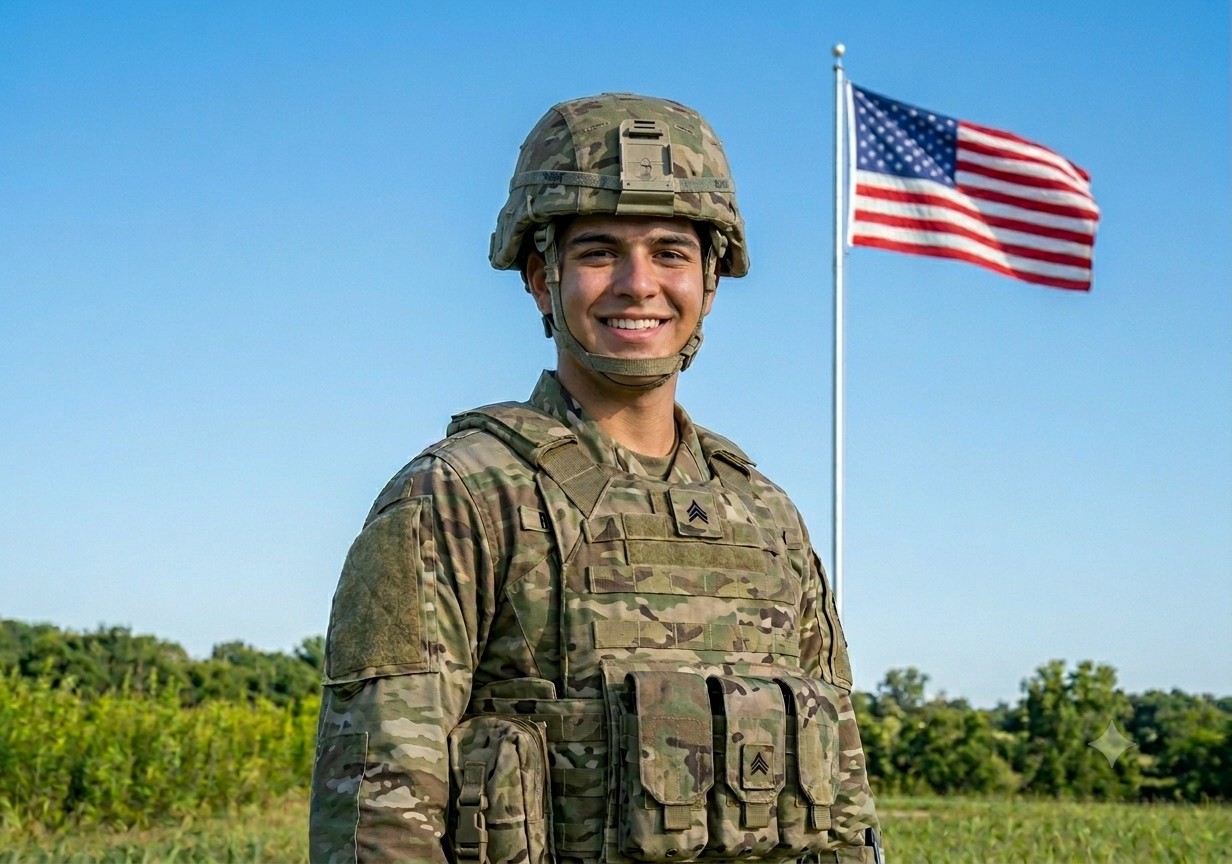
United States Army Birthday takes place on June 14, marking the founding of a military institution that grew from colonial militias into the most expansive branch of the American armed services. Few national institutions carry a story as layered as this one, shaped by political improvisation, desperate necessity, and the stubborn will of untrained men defending something that had not yet received a name. What started as a crisis response in the spring of 1775 became a permanent cornerstone of American identity, evolving over two and a half centuries into a force of extraordinary scale.
U.S. Army Birthday History
Army service in North America predates the United States itself, which makes this institution unusual among the world's major military forces. Independent colonial militias had operated under local authority for generations, their ranks filled by farmers, tradesmen, and laborers with no formal training and no unified command structure above them. These were men defending a patch of land they knew, not soldiers serving an abstract national cause, because no such nation yet existed. It was under the mounting pressure of events that the U.S. Army Birthday was formally created, transforming that chaos into a structured institution with a single commander and a continental mandate.
That pressure arrived on April 19, 1775, when British regulars and Massachusetts militiamen exchanged fire at Lexington and Concord, pulling soldiers from New Hampshire, Connecticut, and Rhode Island into immediate mobilization. A volunteer force called the Army of Observation quickly encircled British-occupied Boston, but the siege exposed a fundamental problem: without a single authority, the effort could not be sustained or expanded. The situation sharpened dramatically on May 10, when delegates gathering in Philadelphia learned that Benedict Arnold and Ethan Allen had seized British forts at Crown Point and Ticonderoga on Lake Champlain, turning a regional confrontation into a continental emergency requiring an institutional response.
The Second Continental Congress acted on June 14, 1775, voting to establish a unified continental force and placing George Washington at its head. The army Washington inherited was fragile: throughout the entire Revolutionary War, Continental forces never exceeded 48,000 soldiers, and most were short-term volunteers cycling in and out rather than career military men. The contrast with the force carrying that legacy forward today is staggering, with more than one million active-duty soldiers currently serving alongside over 800,000 members of the Reserve and National Guard, a scale that would have been incomprehensible to the minutemen who answered the call in 1775.
Why U.S. Army Birthday Matters
Acknowledging Those Who Served
Leaving the military often means stepping back into civilian life without ceremony, recognition, or any public marker of what was given. Many former service members carry that transition quietly, integrating into communities where their history in uniform is simply unknown to the people around them. Taking time on this occasion to ask, listen, and acknowledge fills a gap that no official program fully covers.
Counting an Enormous Legacy
The Army's institutional memory stretches across conflicts, technologies, and geopolitical landscapes that bear almost no resemblance to one another, yet the chain of service connecting them has never broken. Each generation of soldiers inherited a tradition shaped by the one before it and added something of its own to pass forward.
Honoring Personal Sacrifice
Military service asks something of a person that no other profession does: the formal, legal surrender of the right to refuse a dangerous order. Soldiers sign contracts that subordinate their own safety to a mission determined by others, a reality that most civilians never have to confront in any comparable way. Acknowledging that asymmetry once a year is the least a society can offer in return.
How to Observe U.S. Army Birthday
Reach Out Directly
Former service members rarely ask for recognition, which is precisely why offering it without being prompted matters. A direct message, a phone call, or a face-to-face conversation that acknowledges someone's service specifically, not in the generic "thank you for your service" shorthand but with genuine curiosity about their experience, carries real weight. It signals that the sacrifice was seen, not just assumed.
Visit Arlington's Silent Guard
Arlington National Cemetery holds more than three centuries of American military history within a few square miles, and a visit there on or around this day connects the present moment to the weight of everything that came before it. Walking among the headstones or watching the changing of the guard at the Tomb of the Unknown Soldier makes the cost of military service concrete in a way that no article or documentary can replicate.
Throw a Proper Gathering
Marking the day with people you care about is a way of translating an abstract national occasion into something personal and tangible. Food, music, and shared time are how most cultures have always honored the things they value, and there is nothing wrong with letting that logic apply here. A backyard gathering that happens to mention why June 14 matters is more meaningful than a formal ceremony most people will never attend.
Facts About the U.S. Army
Washington's Difficult Command
George Washington lost more battles than he won during the Revolutionary War, yet his ability to keep the Continental Army intact through repeated setbacks proved more decisive than any single victory.
Flag Day Shares the Date
The Continental Army was established on June 14, 1775, the same date later designated as Flag Day, creating an unintentional but enduring calendrical link between two foundational American symbols.
Medicine Organized Immediately
The Army established a dedicated medical department in July 1775, just weeks after its founding, making organized military medicine an American institution before independence was even declared.
West Point's Continuous Presence
The U.S. Military Academy at West Point has been continuously occupied since 1802, making it the oldest continuously garrisoned military post in the United States and the institution that shaped officer culture for over two centuries.
Women Served Early
Women contributed to Army operations as nurses and support personnel as early as the Civil War, and the Women's Army Corps was formally established in 1942, decades before full integration became policy.
U.S. Army Birthday Dates
| Year | Date |
| 2026 | June 14 |
| 2027 | June 14 |
| 2028 | June 14 |