
National New Mexico Day - June 14, 2026
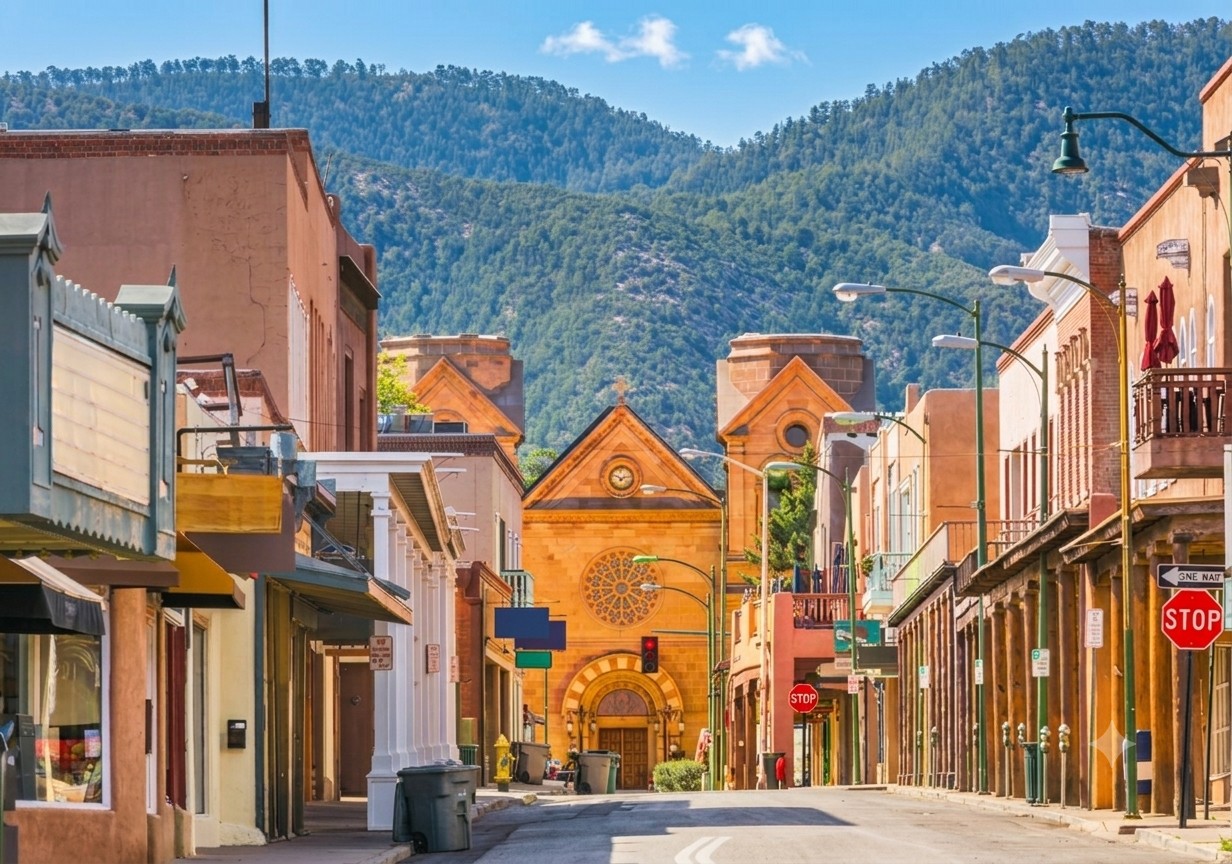
National New Mexico Day is celebrated on June 14, shining a light on a state with more depth than its remote reputation suggests. Few places in America carry as many layers of identity as New Mexico, where ancient ruins, colonial-era architecture, and modern scientific achievement exist side by side. The state's desert landscapes draw visitors expecting emptiness and reward them instead with centuries of accumulated culture and innovation. What begins as a curiosity about red rock and turquoise sky tends to deepen quickly into genuine fascination with all that New Mexico has quietly built and preserved.
National New Mexico Day History
New Mexico is a land that has absorbed wave after wave of civilization, each leaving something permanent behind. The Pueblo people established thriving communities across the region by the 13th century, constructing multi-story dwellings and irrigation systems that archaeologists still study today. When Spanish travelers moving north through the continent arrived in the 16th century, they encountered these preserved remains and returned with reports of hidden riches, sending organized expeditions into the territory by 1540. National New Mexico Day traces its meaning to that layered past, acknowledging a place where multiple civilizations built on top of one another rather than simply replacing what came before.
The long road toward formal statehood began taking shape in 1609, when Pedro de Peralta was appointed governor of what was then called the Kingdom and Provinces of New Mexico. Santa Fe was established as the administrative capital the following year, making it among the oldest continuously governed cities in what is now the United States. Spain's colonial hold eventually gave way when Mexico won its independence, and New Mexico became a Mexican province in 1821, shifting political allegiance while the land itself remained unchanged. That geographic constancy contrasted sharply with the political turbulence that kept coming.
The Mexican-American War, which began in 1846 and ended in 1848 with the Treaty of Guadalupe Hidalgo, transferred the territory to the United States, but statehood remained frustratingly distant. Conflict within the region persisted through the following decades, and it was not until after 1886 that stability allowed ranching communities and new settlers to put down lasting roots. Despite meeting all the formal requirements for statehood well ahead of schedule, New Mexico waited until January 6, 1912, to be admitted as the 47th state of the union, a delay that says as much about national politics as it does about the territory itself.
Why National New Mexico Day Matters
Quietly Leading in Academics
New Mexico leads the entire country in doctoral degree holders per capita, a distinction that surprises people who associate the region primarily with its landscapes rather than its institutions. National laboratories, research universities, and government science programs have long attracted advanced scholars to the region, building an intellectual ecosystem that shows up clearly in census data.
The Sky Comes Alive
Albuquerque hosts a skyward tradition every October that has turned the city into a destination unlike anything else in the American Southwest, drawing crowds that fill hotels and campsites for miles in every direction. The sheer organizational scale of what happens above the Rio Grande Valley each year requires months of preparation and coordination across international borders. For many visitors, the experience reframes what they thought a public event could look and feel like.
Where Atoms Were Split
The desert of New Mexico has carried a scientific significance that few landscapes anywhere can match, serving as the proving ground for technologies that permanently altered what nations believed possible. Researchers and engineers who worked there operated under extraordinary secrecy, aware that what they were doing had no precedent in human experience.
How To Celebrate National New Mexico Day
Join the Novios
Traditional music from New Mexico reflects a blending of cultural influences that is genuinely hard to find elsewhere in the United States, carrying Spanish melodic patterns layered with Indigenous rhythmic sensibilities that evolved over centuries of coexistence. Seeking out recordings or live performances of the regional repertoire gives the occasion a sonic dimension that connects directly to the state's long cultural history.
Dig into Conservation Law
American wilderness protection as a legal concept did not emerge from Washington offices or environmental lobbying groups but from specific arguments made by people who knew New Mexico's backcountry intimately. Following that legal lineage from its regional origins through its national adoption reveals how local knowledge can reshape federal policy in lasting ways. The story behind the legislation turns out to be as compelling as the landscapes it protects.
Pour a Glass of Tradition
The wine grown in New Mexico carries terroir unlike anything produced at lower elevations, shaped by dramatic temperature swings between day and night that concentrate flavor in ways coastal producers rarely achieve. Tracking down a bottle from the region and paying attention to what makes it distinct is a surprisingly engaging way to spend part of the occasion. It tends to prompt questions about the land that lead naturally into everything else the state has to offer.
Facts About New Mexico
Oldest Governing Seat
Santa Fe, established as an administrative capital in 1610, holds the distinction of being the oldest continuously functioning seat of government in the United States.
Royal Road Legacy
El Camino Real de Tierra Adentro, the royal road connecting Mexico City to Santa Fe, was traveled by Spanish colonists for over three centuries and still partially exists as a designated historic trail today.
Roswell Changed Everything
The 1947 incident near Roswell, in which an unidentified object crashed in the desert, became the foundation of modern UFO culture and remains a major draw for curious visitors every year.
A Flag That Stands Apart
New Mexico's banner features the ancient Zia sun symbol on a field of yellow and red, earning it recognition from vexillologists as among the most distinctive and purposefully designed in the country.
Three Cultures, One Identity
New Mexico is the only U.S. state that officially recognizes three distinct cultural groups, Native American, Hispanic, and Anglo, as foundational to its character, a distinction reflected in bilingual government documents and official symbols.
National New Mexico Day Dates
| Year | Date |
| 2026 | June 14 |
| 2027 | June 14 |
| 2028 | June 14 |