
Arborist Appreciation Day - June 16, 2026
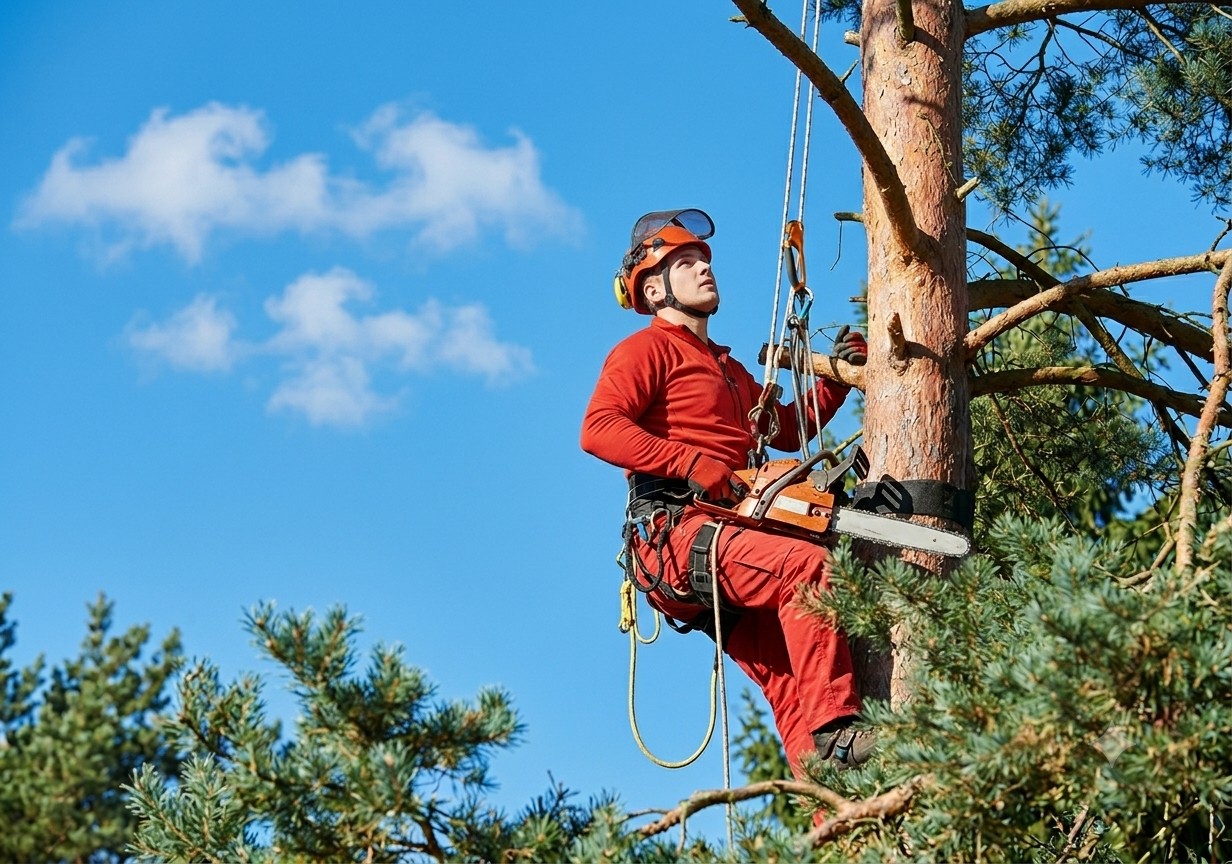
Arborist Appreciation Day is marked on June 16, shining a light on the trained specialists who keep trees structurally sound, biologically healthy, and safe for the communities growing up around them. Their work sits at the intersection of biology, engineering, and physical labor, requiring knowledge that most people never think about until a branch comes down in a storm. An arborist can look at a canopy and read its history the way a doctor reads an X-ray, identifying stress, disease, and structural failure long before the average passerby notices anything wrong.
Arborist Appreciation Day History
Arborists are professionals trained in the cultivation, care, and scientific management of individual trees, a discipline with roots that run surprisingly deep into human history. The practice that would eventually produce the modern arborist began in the ancient world, where civilizations in Mesopotamia and Egypt first cultivated trees deliberately rather than simply harvesting what grew wild. Arborist Appreciation Day reflects that long lineage, pointing back to a time when understanding trees was not a niche skill but a foundational element of agricultural survival, trade, and food security.
The first trees brought under deliberate cultivation were chosen for practical value: date palms in the Middle East for their fruit, olive trees spreading westward into North Africa and eventually Italy for their oil, and fruit-bearing varieties across Europe that became central to medieval economies. By the Middle Ages, the cultivation of apple, pear, apricot, and plum trees had turned arboriculture into a recognized occupation across European communities, with orchards forming the backbone of local food production. The intellectual formalization of the field came in the 18th century when Diderot and D'Alembert's Encyclopédie devoted an entire section called "Arbre" to codifying advanced arboricultural methods, giving practitioners a shared body of knowledge for the first time.
The figure who most directly shaped what arborists do today was John Davey of Kent, Ohio, who in 1873 became recognized as the first tree surgeon after conducting large-scale replanting efforts throughout his community. By 1878 he had built a greenhouse and launched a monthly publication called "Davey's Floral and Landscape Educator" to spread awareness of proper tree planting and management among ordinary citizens. That combination of hands-on practice and public education established the template for modern arboriculture, a field that today counts roughly 8,444 practitioners across the United States in a profession consistently ranked among the country's most physically demanding and hazardous.
Why Arborist Appreciation Day Matters
Dangerous Work Deserves Recognition
Arboriculture consistently appears on lists of the most hazardous occupations in the country, with practitioners regularly working at height, around power lines, and with heavy equipment in confined spaces. The physical demands and genuine risks involved make it all the more striking how rarely the profession receives public acknowledgment outside of industry circles.
Expertise Hidden in Plain Sight
The skills an arborist brings to a job go well beyond a chainsaw and a hard hat, encompassing soil science, plant pathology, cable and bracing systems, and the physics of how large structures fail under load. That depth of training is rarely visible to the people benefiting from it, which means the profession tends to be underestimated until something goes wrong.
Trees Outlive Their Planters
A single mature tree can sequester carbon, filter runoff, reduce urban heat, and support dozens of animal species simultaneously, making the arborist's maintenance work one of the highest-return investments a city can make in its own resilience. Losing a mature tree to preventable disease or structural failure means losing decades of accumulated ecological value that a sapling will take generations to replace. The people who prevent those losses work largely out of public view, which makes recognizing them formally all the more worthwhile.
How to Celebrate Arborist Appreciation Day
Pick Up a Pruning Tool
Taking on a small pruning project at home, even removing a few crossed branches or cleaning up sucker growth around a young tree, builds immediate respect for the scale of what professional arborists manage daily. The physical reality of working around a tree, reading which cuts to make and which to leave alone, makes the profession's complexity concrete in a way that reading about it never quite does. Even a modest effort with a hand saw gives the day a tangible, active quality.
Document a Tree You Love
Spending time photographing and researching a significant tree in your neighborhood, a large street tree, an old specimen in a park, or something unusual in a backyard, builds the kind of personal connection to urban canopy that makes tree care feel personal rather than abstract. Sharing that documentation on social media using the tag #ArboristAppreciationDay extends the reach of the observance without requiring any special resources.
Reach Out Directly
Reaching out directly to a certified arborist in your area, whether to ask about your own trees or simply to express appreciation, costs nothing and means more than most professionals in any field ever hear from the public. Many arborists are happy to do a walkthrough of a property and share what they notice, turning a simple thank-you into a genuinely useful conversation.
Facts About Arborists
Certification Requires Rigor
The International Society of Arboriculture administers a credentialing exam that tests candidates across eight domains of tree knowledge, and recertification requires ongoing continuing education units every three years.
Trees Communicate Distress
Arborists are trained to read physical signals such as crown dieback, bark discoloration, fungal growth at the base, and unusual leaf drop as early indicators of stress that untrained observers typically miss until the damage is severe.
Urban Roots Face Unique Pressure
City trees contend with compacted soil, restricted root zones, reflected heat from pavement, and pollution levels that their rural counterparts never encounter, requiring specialized management strategies that arborists develop specifically for urban environments.
Ancient Roots Run Deep
The word "arborist" derives from the Latin "arbor," meaning tree, and the professional identity of the tree keeper has existed in some form since ancient Mesopotamian agricultural records first described deliberate orchard management.
Lightning Rods Protect Landmarks
Some arborists specialize in installing lightning protection systems for significant or heritage trees, using copper cable systems that redirect electrical discharge safely into the ground and preserve specimens that might otherwise be split or killed by a single strike.
Arborist Appreciation Day Dates
| Year | Date |
| 2026 | June 16 |
| 2027 | June 16 |
| 2028 | June 16 |