
International Day of the African Child - June 16, 2026
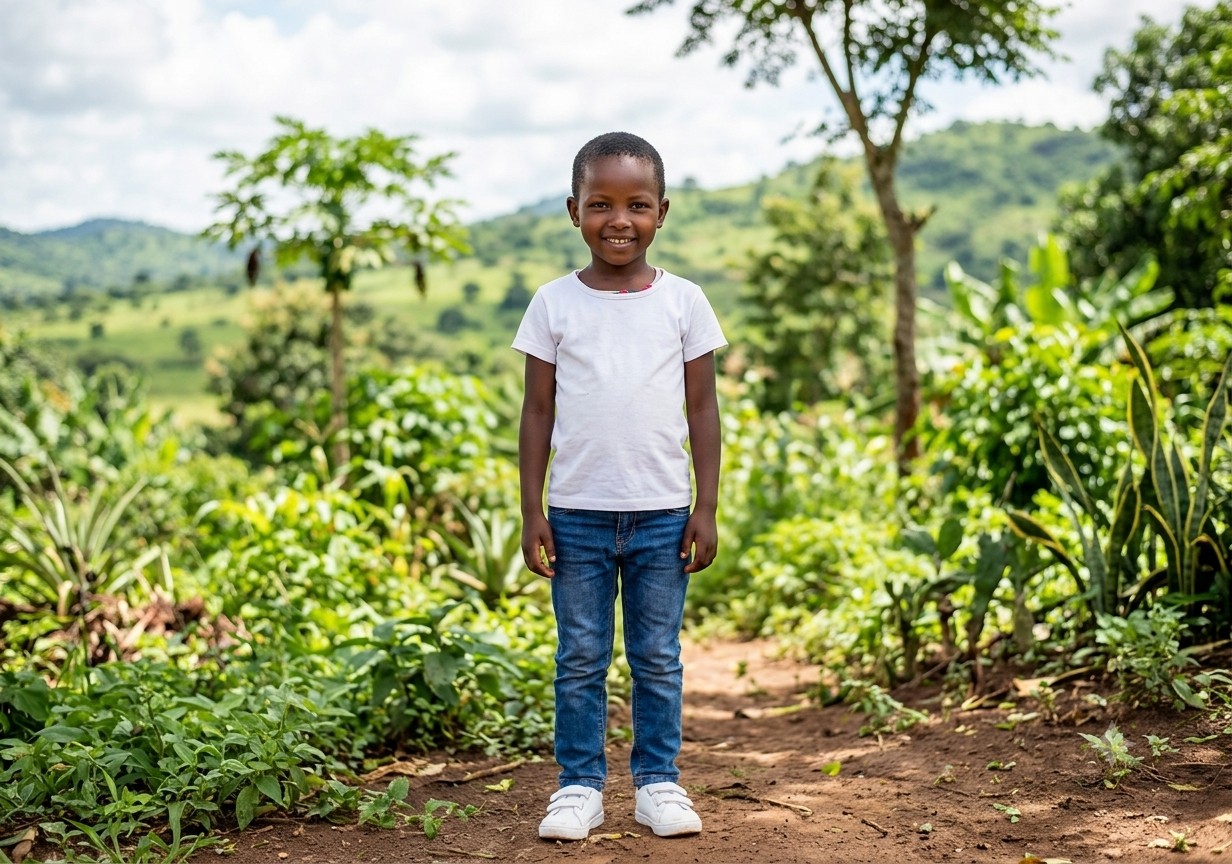
International Day of the African Child falls on June 16, marking a moment when the world turns its full attention to the futures being built or denied for millions of young people across the continent. Few occasions carry the weight of a specific historical wound and a living present challenge at the same time, yet this one does. What happened in a South African township nearly five decades ago still echoes in classrooms, policy debates, and the lives of children who have never heard the name Soweto.
International Day of the African Child History
African children have rarely been afforded the luxury of a passive relationship with history; they have shaped it, often at enormous personal cost. The 1976 protest in Soweto was organized by students who understood that the apartheid government's insistence on Afrikaans as the language of instruction was not a bureaucratic inconvenience but a deliberate mechanism of exclusion, designed to keep them subordinate and underprepared. Roughly ten thousand young people marched through the township that June, demanding an education system that treated them as full human beings rather than subjects of a colonial administration. International Day of the African Child was instituted by the Organization of African Unity in 1991 to give that act of defiance a permanent place in the continental conscience and to keep children's rights at the center of political conversation.
The violence that met the marchers was immediate and lethal: police opened fire on the crowd, killing children and sending shock through every corner of the world that was paying attention. Hector Pieterson, one of the first students shot dead that day, became a symbol whose photograph traveled across borders and languages, forcing audiences everywhere to confront the reality of what state violence against children looked like. The Soweto Uprising lasted months beyond that initial day, drawing in families, teachers, and workers who recognized that the assault on learning was an assault on the entire community's capacity to survive. Global outrage contributed to growing international pressure on the apartheid regime, accelerating a reckoning that would take years more to arrive but could no longer be indefinitely postponed.
The foundation laid in Soweto gave shape to a broader continental commitment that emerged in the years that followed, most concretely in the African Charter on the Rights and Welfare of the Child, adopted in 1990 and entering into force in 1999. That charter addressed the full architecture of a child's life: the right to survive infancy, to receive an education free from discrimination, to be protected from labor and abuse, and to participate meaningfully in decisions that affect them. Every June, governments, civil society groups, and communities use the occasion to measure how far practice has traveled from principle, asking whether children with disabilities can reach a classroom, whether families in poverty can sustain attendance, and whether young people are genuinely heard when policies about their lives are being written. Progress has been uneven and often frustratingly slow, which is precisely why the date remains a call to action rather than a moment of simple commemoration.
Why International Day of the African Child Matters
Protecting Vulnerable Futures
Children facing poverty, displacement, or conflict have the least margin for error when institutions fail them. Without coordinated protection systems, the most vulnerable young people fall through gaps that policy never intended but also never adequately closed. Sustained advocacy ensures that visibility for these children does not disappear between headlines.
Remembering Collective Courage
History becomes powerful when its lessons are carried forward by people who genuinely understand what was at stake. The students who marched in 1976 demonstrated that young people are capable of moral clarity even when adults around them have made compromises. Keeping that memory alive challenges each generation to ask what they are willing to stand for.
Dignity Through Learning
Access to quality schooling transforms not just individual prospects but entire communities across generations. When children acquire literacy and critical thinking early, they gain the capacity to question, build, and lead rather than simply endure. Societies that invest in inclusive classrooms tend to develop stronger civic institutions and more resilient economies over time.
How to Observe International Day of the African Child
Amplify Young Voices
Following and sharing content created by African youth journalists, activists, and artists gives their perspectives a wider audience without speaking over them. Platforms where young people are producing analysis, art, or advocacy deserve attention from audiences outside their immediate communities. Choosing to engage with their work rather than only consuming narratives produced about them is a meaningful distinction.
Bring the Story Into Classrooms
Teachers and parents can introduce the history of the Soweto Uprising into conversations with young people, framing it not as a distant tragedy but as evidence that students have changed the world before. Discussing why children marched, what they risked, and what changed as a result gives students a sense of their own potential agency.
Back a Youth Fund
Contributing to organizations that build classrooms, train teachers, or provide learning materials in underserved communities creates tangible and lasting impact. Even modest donations pooled together can fund an entire classroom's worth of supplies or cover fees for a child whose family cannot manage them. Researching which groups publish transparent financial reporting helps ensure that contributions reach their intended destination.
Facts About the African Child
Youngest Continent on Earth
Africa has the world's largest proportion of children and young people, with roughly sixty percent of its population under the age of twenty-five.
Charter Ratification Progress
As of recent years, forty-three of the fifty-five African Union member states have ratified the African Charter on the Rights and Welfare of the Child.
Photography That Moved the World
The photograph of Hector Pieterson taken by Sam Nzima on June 16, 1976 became one of the most widely reproduced images in the history of anti-apartheid documentation.
Girls and Dropout Rates
In several regions of sub-Saharan Africa, girls are significantly more likely than boys to leave formal study before completing secondary levels, often due to early marriage or domestic responsibilities.
OAU Founding Context
The Organization of African Unity that established this observance was itself founded in 1963 in Addis Ababa, Ethiopia, as the first continental body dedicated to African political unity and decolonization.
International Day of the African Child Dates
| Year | Date |
| 2026 | June 16 |
| 2027 | June 16 |
| 2028 | June 16 |