
World Sea Turtle Day - June 16, 2026
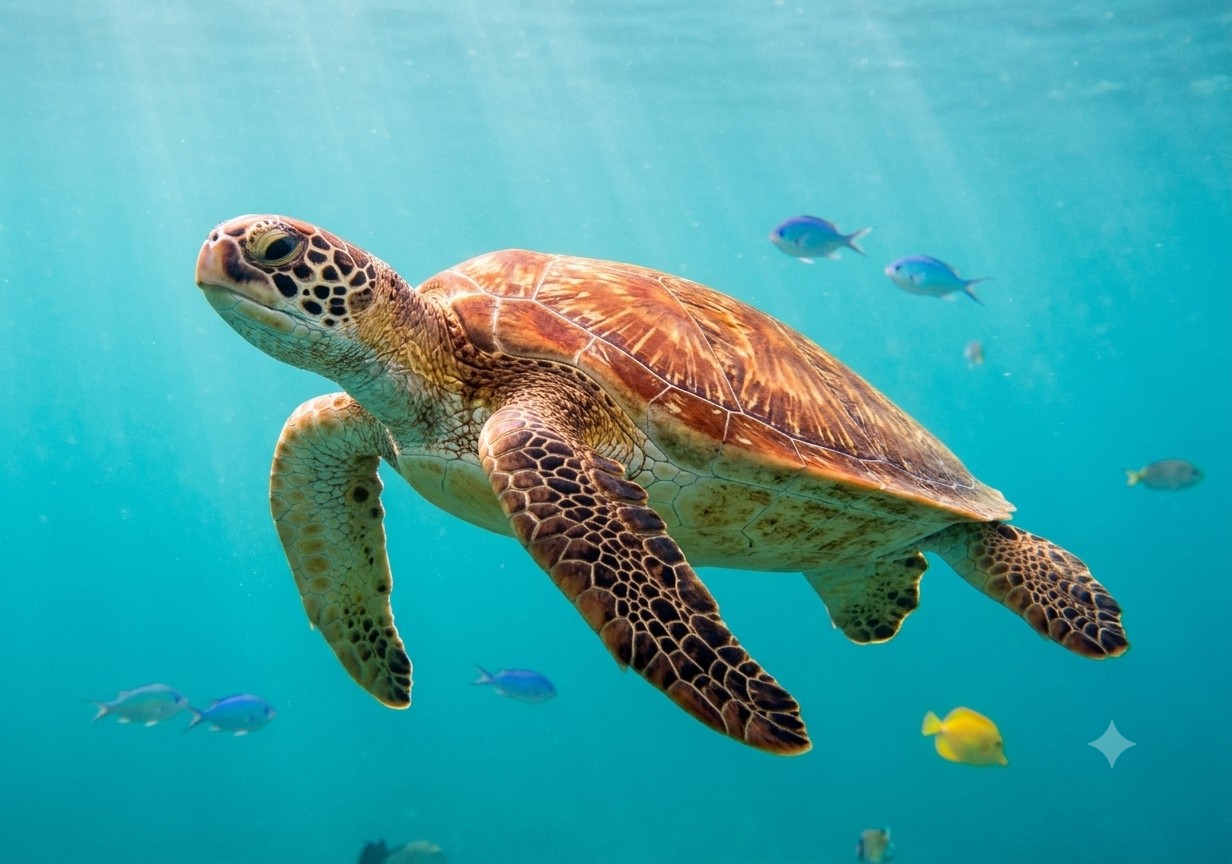
World Sea Turtle Day is observed every June 16, set aside to recognize creatures that have navigated the world's oceans largely unchanged since the age of dinosaurs. Their persistence across geological time is remarkable, but what makes this occasion urgent is that for the first time in that vast history, their survival is genuinely uncertain. Seven species still swim today, each threading its way through a world that has grown more hostile to them within a single human lifetime.
World Sea Turtle Day History
Sea turtles are reptiles whose lineage stretches back roughly 110 million years, making them contemporaries of creatures that no longer exist and survivors of at least one mass extinction event. For most of that history they existed entirely outside human awareness, following migratory routes and nesting cycles refined over geological time. World Sea Turtle Day was created to mark the birthday of Dr. Archie Carr, the American zoologist whose decades of fieldwork in the mid-twentieth century built the scientific foundation for understanding how these animals live, migrate, and reproduce, earning him the informal title "father of sea turtle biology." Carr's insistence that sea turtles could only be protected if their full life cycle was understood, not just the moments visible from a beach, shaped the entire field that followed him.
The nesting process these animals undertake is one of the more extraordinary behaviors in the vertebrate world. A female returns to the beach where she hatched, sometimes traveling thousands of kilometers to do so, uses her rear flippers to excavate a chamber in the sand, and deposits roughly a hundred eggs before concealing the site and retreating to the ocean. She may repeat this process several times in a single season and then not nest again for two or three years, her body requiring time to rebuild the reserves that reproduction demands. What the eggs become is partly determined by temperature: warmer sand tends to produce females, cooler sand tends to produce males, a sex-determination mechanism that has become a conservation concern as average beach temperatures rise and skew ratios in ways that could affect future populations.
Modern research has transformed what scientists can know about the time sea turtles spend away from nesting beaches, which accounts for the vast majority of their lives. Satellite tracking technology has allowed researchers to follow individuals across entire ocean basins, revealing feeding grounds, migration corridors, and resting areas that conservation efforts had previously overlooked entirely. Hatchlings face their first major obstacle on the beach itself: artificial lighting from coastal development pulls them away from the sea, since they navigate by moving toward the brightest horizon, and a lit-up shoreline can send them in the wrong direction at the moment they are most vulnerable. The combination of that threat with pollution, bycatch in fishing gear, and the loss of nesting habitat has placed most sea turtle species on threatened or endangered lists, giving this annual occasion a pressure behind it that grows rather than eases.
Why World Sea Turtle Day Matters
Science That Still Has Questions
Despite decades of research, significant gaps remain in understanding the early years of sea turtle life, sometimes called the "lost years," when juveniles disappear into the open ocean and are rarely observed. Each new tracking study or tagging program adds to a picture that is still incomplete, meaning conservation depends on continued investment in research rather than relying on what is already known.
Shared Vulnerability
The same forces threatening sea turtles, warming water, plastic-choked beaches, light pollution along coasts, affect the broader health of ocean environments that billions of people depend on for food and livelihood. Focusing attention on a visible and well-understood species creates a practical entry point into conversations about systemic change that are harder to have in the abstract. What helps a sea turtle nest successfully tends to help the entire ecosystem around it.
Ancient Oceans in Peril
Sea turtles play a functional role in marine ecosystems that goes beyond their symbolic value, grazing on seagrass beds in ways that keep those habitats healthy and productive for dozens of other species. Their decline removes a presence from the ocean that has been continuous for longer than most life forms on land have existed. Losing them would not be a contained loss but a signal that something fundamental about coastal and open-water systems has broken.
How to Observe World Sea Turtle Day
Cut Single-Use Plastic at the Source
Declining plastic bags, straws, and packaging in daily purchasing decisions reduces the volume of material that eventually reaches marine environments, where sea turtles can mistake it for jellyfish and consume it. Choosing vendors and products that use minimal or recyclable packaging compounds that effect over time.
Back a Tracking Program
Several sea turtle research organizations allow members of the public to sponsor the satellite tagging of individual turtles, which funds the equipment and field time needed to gather migration data. Following the tracked animal online afterward connects a financial contribution to a tangible, ongoing story. Programs like these also generate the data that governments and fisheries managers use when setting regulations.
Cut Single-Use Plastic at the Source
Declining plastic bags, straws, and packaging in daily purchasing decisions reduces the volume of material that eventually reaches marine environments, where sea turtles can mistake it for jellyfish and consume it. Choosing vendors and products that use minimal or recyclable packaging compounds that effect over time.
Facts About Sea Turtles
Longest Known Migration
Leatherback sea turtles hold the record for the longest migration of any reptile, with some individuals tracked traveling over 20,000 kilometers between nesting beaches and feeding grounds.
No Teeth Required
Sea turtles lack teeth entirely and instead use sharp-edged jaws adapted to their specific diet, whether that is jellyfish, seagrass, sponges, or crustaceans depending on the species.
Temperature Determines Sex
Unlike most vertebrates, sea turtles have no sex chromosomes; the temperature of the sand during incubation determines whether each egg develops as male or female.
Painted by Algae
The green sea turtle takes its name not from the color of its shell but from the greenish fat beneath its skin, which gets its hue from the algae and seagrass that make up most of its diet.
Navigation by Magnetism
Sea turtles navigate using the Earth's magnetic field, detecting both the intensity and inclination of magnetic lines to locate their position across open ocean with a precision that still challenges full scientific explanation.
World Sea Turtle Day Dates
| Year | Date |
| 2026 | June 16 |
| 2027 | June 16 |
| 2028 | June 16 |