
International WaterFall Day - June 16, 2026
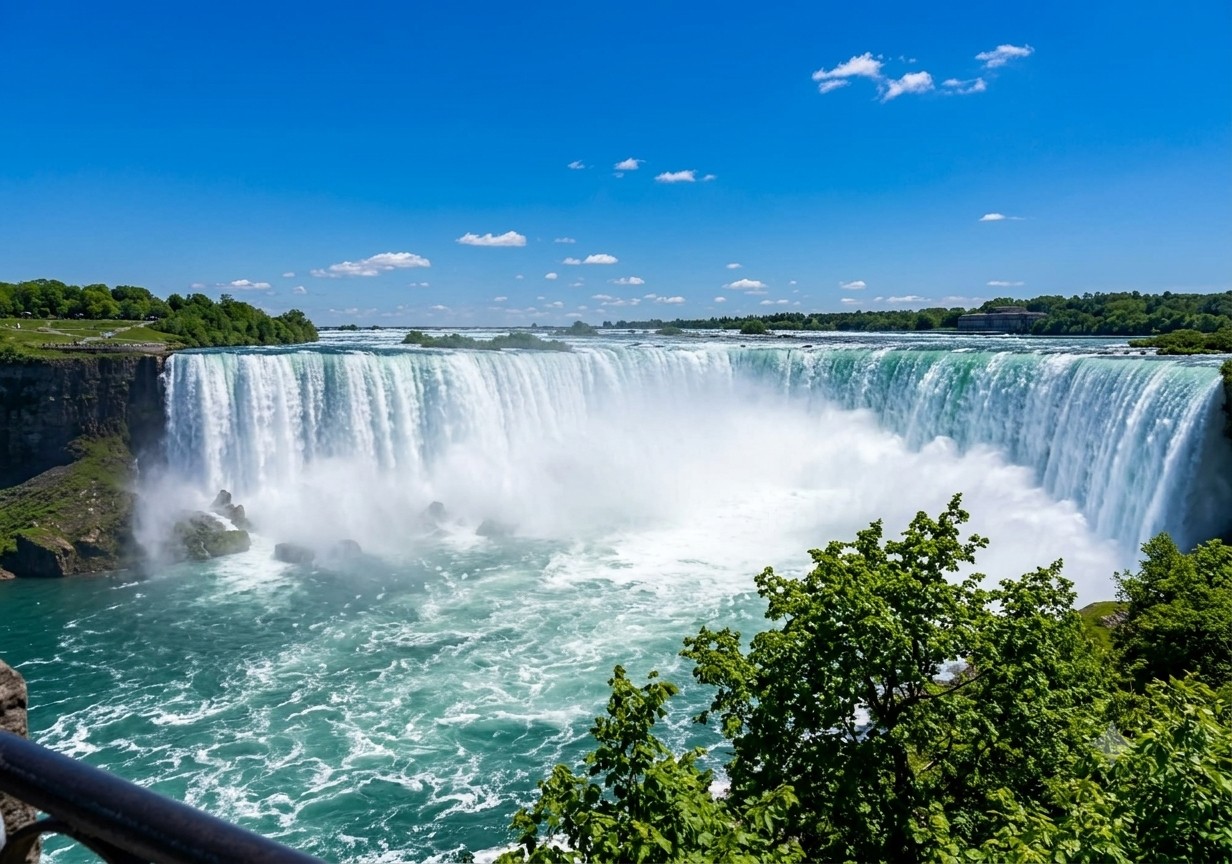
International WaterFall Day is marked every year on June 16, turning a collective gaze toward some of the most dramatic and acoustically overwhelming features the natural world has to offer. A waterfall does something few landscapes can: it commands every sense at once, filling the air with mist, sound, and motion that no photograph has ever fully captured. Cultures from Japan to Zimbabwe have built spiritual meaning around these cascades, reading in their roar something that feels older than language.
International WaterFall Day History
Waterfalls form where a river meets a sudden drop in elevation, typically over resistant rock that erodes more slowly than the softer material beneath it, creating a ledge that sends water plunging rather than flowing. Classifying them has proven surprisingly contentious: researchers debate whether to sort cascades by height, flow volume, the number of drops, or the shape of the plunge, and no single system has won universal agreement. What is clear is that formal scientific attention to waterfalls arrived late; Alexander von Humboldt included observations on them in his writings during the 1820s, but the study of cascades remained peripheral to mainstream geography for decades after. International WaterFall Day exists partly to address that gap, giving a phenomenon that shapes river ecosystems, powers communities, and draws millions of travelers each year a moment of undivided cultural recognition.
The colonial history of waterfall naming reveals something uncomfortable about how geography was recorded. When Scottish physician David Livingstone reached the vast cascade on the Zambezi in 1855, he renamed it Victoria Falls in tribute to the British queen, overwriting Mosi-oa-Tunya, the name the Kololo people had long used, meaning "the smoke that thunders." Earlier, in 1493, Christopher Columbus documented Carbet Falls in Guadeloupe, a moment geographer Brian J. Hudson points to as possibly the earliest written European record of a waterfall in the Americas, though Hudson also notes that deliberate naming of waterfalls by Europeans was rare before the 18th century. The pattern that emerged as naming became more systematic reflected the priorities of empire: natural features were catalogued and rechristened in ways that erased indigenous knowledge and inserted European identity into landscapes that had already been understood and named for generations.
The 18th and 19th centuries brought a shift in how waterfalls were perceived, driven by two forces moving in the same direction from different angles. Romanticism elevated wild and dramatic landscapes into objects of aesthetic pilgrimage, making a journey to a great cascade a culturally respectable pursuit; the Industrial Revolution simultaneously revealed waterfalls as engines, capable of driving mills and, later, generating hydroelectric power that would reshape entire economies. Studying them became known informally as "waterfallology," a term without an official academic home but widely used by enthusiasts who wanted a word for what they were doing. Today, cascades draw visitors in enormous numbers not despite being geologically uncommon but partly because of it, their rarity adding to the pull that their spectacle already provides.
Why International WaterFall Day Matters
Freshwater Systems at Risk
The rivers that feed waterfalls are among the most stressed freshwater systems on the planet, threatened by extraction, pollution, and altered precipitation patterns. When upstream water sources are depleted or diverted, the cascades downstream shrink or disappear entirely, taking with them the ecosystems and communities that depend on consistent flow.
Spiritual and Cultural Depth
Across dozens of traditions worldwide, flowing water carries meaning that goes beyond the physical, from the Japanese Shinto practice of misogi, where standing beneath a cascade is a form of purification, to West African ceremonial uses of riverine sites. These associations remind people that waterfalls have been central to human meaning-making long before they appeared on travel itineraries.
What the Body Feels
Standing near a large cascade produces a physical experience that most urban environments simply cannot replicate, combining negative ions in the air with constant sound and motion that measurably reduce stress responses. That kind of unmediated contact with moving water has been linked in numerous studies to improvements in mood and mental clarity. Giving this experience a dedicated occasion encourages people to seek it out rather than let it remain an indefinite item on a list.
How to Celebrate International WaterFall Day
Engage With Indigenous Names
Looking up the original names given to famous waterfalls by the peoples who lived near them, and using those names when talking or writing about them, is a small act with real cultural meaning. Organizations focused on geographic renaming and indigenous language preservation often provide resources for this. Choosing to say Mosi-oa-Tunya alongside or instead of Victoria Falls, for example, acknowledges a history that official maps have long obscured.
Trace the Water's Journey
Spending time learning about the specific river system behind a favorite waterfall, from its source elevation to the downstream path it takes after the drop, builds a much richer understanding than simply watching the falling water. Many watershed organizations publish accessible guides to the geology and ecology of major river systems. Following that chain of connections can turn a casual interest into genuine investment in a place.
Find Your Nearest Cascade
Searching a topographic map or a dedicated waterfall database for the closest accessible cascade can reveal surprising options within a few hours of almost any location. Packing a bag and making the trip transforms an abstract appreciation into a physical memory. Getting there early tends to reward with quieter surroundings and better light for anyone who wants to photograph what they find.
Facts About Waterfalls
Tallest on the Planet
Angel Falls in Venezuela drops 979 meters in a single plunge, making it the tallest uninterrupted waterfall on Earth by a significant margin.
Sound as Measurement
Hydrologists sometimes use the acoustic signature of a waterfall to estimate flow rates, since the volume and frequency of the sound shifts measurably with the amount of water passing over the drop.
Frozen Mid-Fall
Niagara Falls has frozen solid enough for people to walk across it on a small number of occasions in recorded history, most recently in the early twentieth century.
Underground Cascades
Some of the world's largest waterfalls by volume exist entirely underground, where subterranean rivers plunge through cave systems with no sunlight and few human observers.
Erosion Travels Upstream
Waterfalls migrate slowly upstream over geological time as the water erodes the rock beneath the lip of the drop, meaning that a waterfall's location today is not where it began.
International WaterFall Day Dates
| Year | Date |
| 2026 | June 16 |
| 2027 | June 16 |
| 2028 | June 16 |